Affiliate Disclosure: This post contains affiliate links. If you buy through one of them, I may earn a small commission at no extra cost to you. I only recommend stores I’ve actually ordered from or researched thoroughly — my opinions are my own.
The Problem: Too Many Options Makes It Hard to Just Start
If you’ve decided you want to start collecting anime figures, the sheer number of options can be genuinely paralyzing — Nendoroid or Figma or scale figure, which manufacturer, which character, how much to spend, where to even buy it from. It’s a lot to figure out before you’ve even made your first purchase.
In my experience, the collectors who get stuck the longest aren’t the ones who don’t know what they like — they’re the ones trying to make the “perfect” first decision instead of just making a reasonable one. This guide is meant to cut through that: a straightforward starting point based on what actually works well for a first purchase, without needing to have every preference figured out in advance.
Who This Article Is NOT For
- If you’ve already made your first purchase and are past this stage, this is more useful to share with someone else just getting started than for yourself at this point.
- If you already know exactly what you want, there’s no need to overthink it with a “beginner framework” — go buy it.
- If budget genuinely isn’t a factor for your first purchase, some of the cost-based reasoning here matters less — buy whatever excites you most.
What Actually Makes a Good First Figure
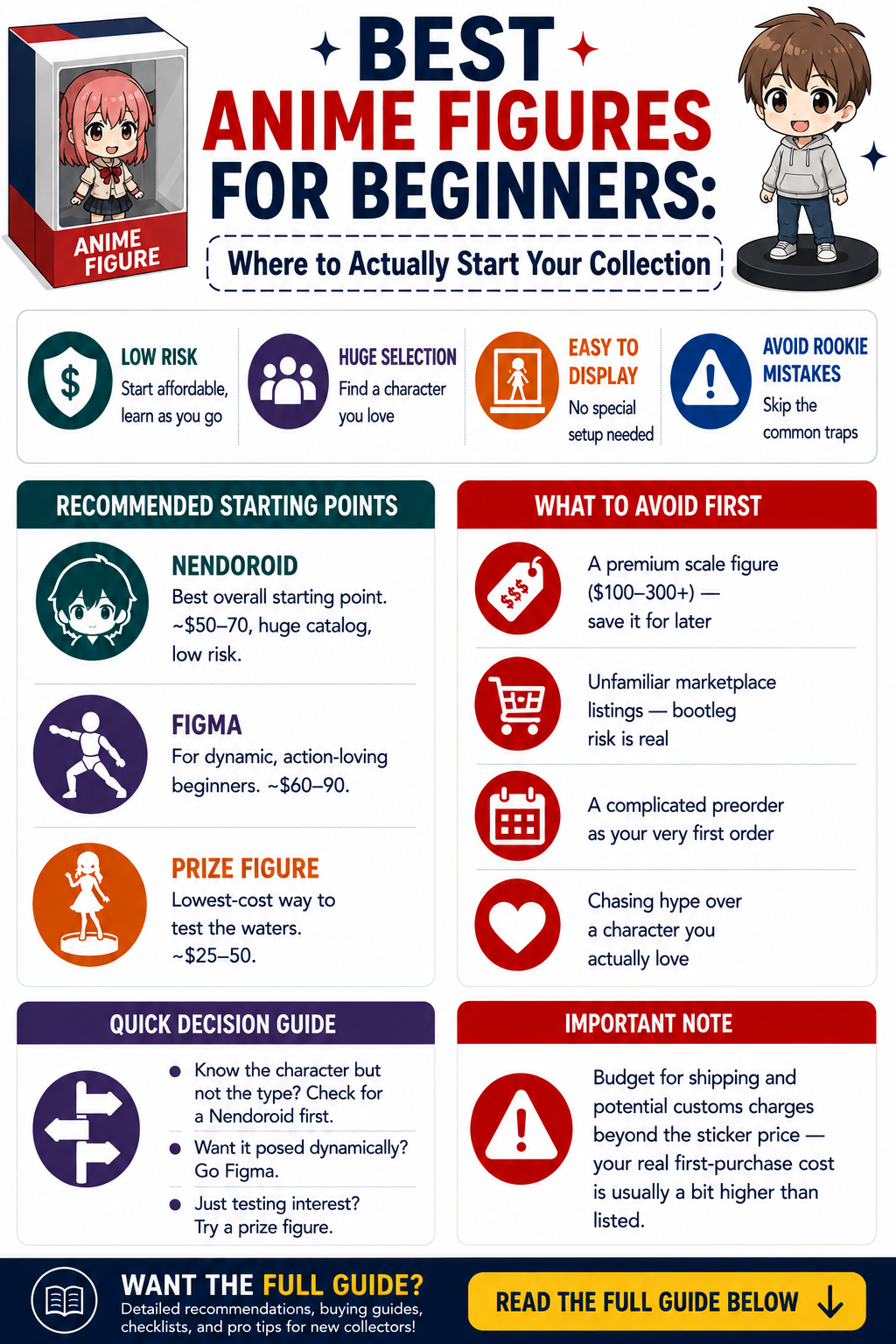
1. Low financial risk. Your first purchase is also your first chance to learn how a store’s shipping, packaging, and process actually works — you want that learning experience to come from something affordable, not your most expensive purchase.
2. Broad appeal and availability. A figure type with a huge catalog gives you the best chance of finding a character you already love, rather than compromising on your first purchase.
3. Manageable commitment. Something that doesn’t require special display considerations, extensive posing skill, or a big shelf investment right away.
The Recommended Starting Point: Nendoroid
If you only take one piece of advice from this article, it’s this: for almost every new collector, a Nendoroid is the right first purchase.
- Price is low-risk. Generally in the $50–70 range, which means a purchase that doesn’t go perfectly (wrong character choice, wanting something different next time) doesn’t sting financially.
- The catalog is enormous. If a character has merchandise at all, there’s a strong chance a Nendoroid exists for them, which means you’re very likely to find one of a character you already love rather than settling.
- They’re genuinely fun, not just a “starter” compromise. Interchangeable face plates and small accessories make them engaging to own, not just a stepping stone to something else.
- They’re forgiving to display. Small footprint, no special lighting or case requirements to get started, and durable enough for a first-time buyer still learning how to handle and store figures carefully.
If You Want Something More Dynamic: Figma
If you already know you’re drawn to action-heavy series and want your first figure posed dynamically rather than sitting still, Figma is a reasonable alternative starting point — slightly pricier than a Nendoroid (roughly $60–90), but still well within low-risk territory for a first purchase.
If You Want to Test the Waters Before Spending Much at All
Prize figures are a genuinely reasonable way to dip a toe in before committing to a full-price figure — officially licensed, generally in the $25–50 range, with the tradeoff of more variable quality between manufacturers and sub-lines. This is a fine way to see whether collecting appeals to you at all before spending more.
What to Avoid for Your First Purchase
- A premium scale figure, however tempting. The price (often $100–300+) and lack of forgiveness if you’re not sure about display space or long-term interest make this a riskier first move — save it for once you know you’re genuinely committed to the hobby.
- Buying from an unfamiliar marketplace listing to save a few dollars. Your first purchase is the worst time to accidentally receive a bootleg — stick with a trusted retailer for your first order, even if it costs slightly more.
- A complicated preorder as your very first order. Preorders involve payment timing quirks and release delays that are easier to navigate once you already understand how a store’s process works — an in-stock item is a gentler introduction. My first-time buyer’s guide covers both paths in detail once you’re ready.
- Chasing hype over genuine interest. A popular figure you don’t actually care about tends to be a less satisfying first purchase than a less-hyped figure of a character you genuinely love.
A Simple Decision Framework
“I know exactly which character I want, but not which figure type.” Check whether a Nendoroid exists for that character first — it’s the lowest-risk way to start, and you can always add a Figma or scale figure of the same character later once you know you’re committed.
“I’m not sure which character I even want yet.” Take some time browsing a trusted retailer’s Nendoroid catalog specifically — the format’s broad coverage makes it a good way to browse without narrowing yourself to one figure type’s limited selection first.
“I want to spend as little as possible to see if I even like collecting.” Start with a prize figure rather than a full-price Nendoroid — lower stakes, though expect more variability in quality.
“I already know I want something dynamic and posed.” Go with Figma over a static scale figure for your first purchase — you get the posability you’re after without the price and space commitment of a premium scale piece.
Frequently Asked Questions
Is a Nendoroid really the best choice for every beginner? It’s the best choice for most beginners specifically because of the combination of low price, huge catalog, and low display commitment — but if you already know you want something more dynamic or detailed, that’s a completely valid reason to start elsewhere.
Should my first figure be a character I already love, or whatever looks good? A character you already love, if possible. First purchases you’re genuinely attached to tend to hold up better as a positive first experience than ones chosen purely because they were available or discounted.
Is it a mistake to start with a scale figure if that’s genuinely what I want most? Not necessarily a mistake, but it does raise the stakes on your first purchase before you’ve learned how shipping, condition, and display actually work in practice. If you’re confident and prepared for that, it’s a personal choice rather than an objective error.
How much should I expect to spend on my first figure, all in? Beyond the figure’s sticker price, factor in shipping and potential customs charges, which vary by country — budgeting for a total somewhat above the listed price avoids an unpleasant surprise at checkout or delivery.
Final Thoughts
The “right” first figure isn’t a single universal answer, but a Nendoroid of a character you genuinely love is the starting point that works well for the vast majority of new collectors — affordable enough that a less-than-perfect first choice doesn’t sting, broad enough in catalog that you’re likely to find exactly what you want, and forgiving enough to display without any special setup.
Once you’ve made that first purchase and have a feel for the process, my Nendoroid vs Figma vs Scale Figure guide and comparison of trusted retailers are the natural next steps for figuring out where your collection goes from here.
コメントを残す