Affiliate Disclosure: This post contains affiliate links. If you buy through one of them, I may earn a small commission at no extra cost to you. I only recommend stores I’ve actually ordered from or researched thoroughly — my opinions are my own.
The Problem: Cheap Figures Feel Like They Must Be a Catch
If you’ve browsed figure listings and noticed some surprisingly affordable pieces — often $25–50 for something that looks reasonably detailed in photos — your instinct might be to assume there’s a catch. After everything I’ve covered about spotting bootlegs, a little suspicion toward “too cheap to be true” pricing is a healthy habit.
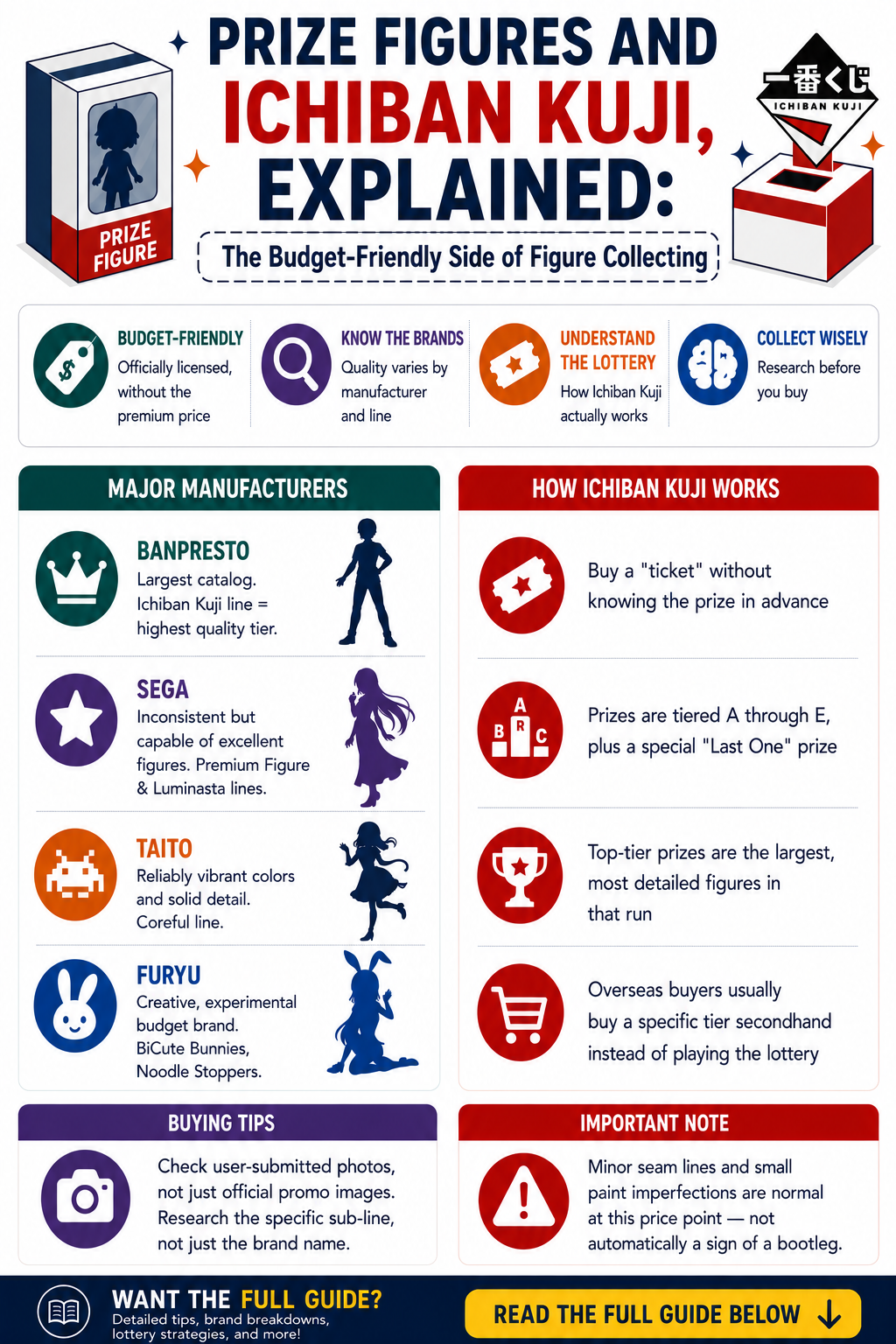
But this is actually a completely legitimate, well-established corner of the hobby: prize figures and Ichiban Kuji figures. They’re officially licensed, made by real manufacturers, and genuinely budget-friendly by design — they’re just built and distributed differently than the scale figures and Nendoroids I usually cover. This guide explains what they are and how to collect them well.
Who This Article Is NOT For
- If you only want museum-grade sculpting and paint detail, prize figures generally won’t satisfy that — they’re a different value proposition entirely, and premium scale figures are the better fit.
- If inconsistent quality within the same product line bothers you, this is worth knowing upfront: prize figure quality varies meaningfully between manufacturers, sub-lines, and even individual units of the same figure.
- If you’re not interested in a budget-friendly way to expand your collection, and price isn’t a concern for you, this category may simply not be necessary for how you already collect.
What Actually Defines This Category
1. Original distribution method. Prize figures were originally designed to be won from Japanese arcade crane games (“UFO catchers”), while Ichiban Kuji figures come from a ticket-based lottery system — neither started as a normal retail product, even though both are now widely available for direct purchase.
2. Price point by design. These are intentionally more affordable than scale figures, generally in the $25–50 range for standard prize figures, with kuji top prizes running higher.
3. Quality that varies by manufacturer and sub-line, much more than you’d see with premium scale figure brands — this is the trade-off for the lower price.
The Major Manufacturers and Their Sub-Lines
| Manufacturer | Known For | Notable Sub-Lines |
|---|---|---|
| Banpresto (Bandai Namco subsidiary) | The largest catalog and release pace in this category | Grandista (larger, premium-leaning), Ichiban Kuji (their lottery line, generally the highest quality tier), QPosket (chibi-style) |
| SEGA | Inconsistent but capable of genuinely excellent figures | Premium Figure, Luminasta, SPM (Super Premium) |
| Taito | Known for reliably vibrant colors and solid detail for the price | Coreful |
| FuRyu | A creative, experimental budget-friendly brand | BiCute Bunnies, Noodle Stoppers (novelty figures designed to sit on instant ramen cup lids) |
A practical note on quality: even within a single manufacturer, sub-lines aren’t interchangeable in quality. Banpresto’s Ichiban Kuji line, for example, is generally considered the strongest tier they produce — sometimes genuinely rivaling older scale figures — while their standard prize figure lines are more of a mixed bag. It’s worth researching the specific sub-line, not just the manufacturer name, before buying.
How Ichiban Kuji Actually Works
Ichiban Kuji (一番くじ) is Bandai’s lottery figure system, and it works differently from a normal purchase:
- You buy a “ticket,” typically at a Japanese convenience store, without knowing in advance which prize you’ll receive
- Prizes are organized into tiers, usually labeled A through E (or similar), with a special final “Last One” prize awarded to whoever draws the final ticket in a given run
- The top-tier prizes are typically the largest, most detailed figures in that specific run, and tend to command the highest resale prices outside Japan
- Since the system is genuinely randomized, getting a specific tier isn’t guaranteed by buying tickets — this is part of why top-tier kuji prizes often resell at a real premium afterward
For overseas collectors, buying individual lottery tickets generally isn’t practical unless you’re actually in Japan. The realistic path is buying a specific prize tier secondhand or through a specialty importer, which does mean paying above the original lottery price — but it removes the randomness if you want a specific prize.
Where to Actually Buy Prize Figures and Kuji Prizes
- General retailers that also carry prize figure and kuji stock. It’s worth checking whether your preferred trusted retailer carries this category alongside their standard figure catalog, since several do.
- Secondhand specialists. Mandarake, which I’ve mentioned before for rare and discontinued figures, is also a reasonable place to find specific kuji prize tiers and older prize figures.
- Marketplace listings, with the same caution that applies elsewhere on this site — check seller reputation, and be appropriately skeptical of prices that seem unusually low even by prize-figure standards, since bootlegging isn’t exclusive to premium scale figures.
Tips for Buying Prize Figures Well
- Look at user-submitted photos, not just official promotional images, before buying a specific figure. Community sites and marketplace review photos tend to show more realistic paint and sculpt quality than polished official product shots.
- Research the specific sub-line, not just the brand. As covered above, quality varies enormously even within one manufacturer’s catalog — a quick search on the specific line name before buying is worth the extra minute.
- Expect minor imperfections as normal for this category. Seam lines, slightly off-center decals, and small paint inconsistencies are common at this price point and aren’t necessarily signs of a bootleg — they’re a known trade-off of mass production at a lower cost.
- Buy at launch if you want the best price on a hyped kuji prize. Popular kuji top prizes can genuinely double in resale price within months of a sold-out run, similar to the scarcity dynamics I’ve covered with limited editions.
Frequently Asked Questions
Are prize figures bootlegs or lower-quality knockoffs? No — they’re officially licensed products from real manufacturers like Banpresto, SEGA, Taito, and FuRyu, just made and distributed differently (and more cheaply) than premium scale figures. Quality varies more than premium lines, but legitimacy isn’t the issue.
Is it worth buying a specific Ichiban Kuji prize tier secondhand instead of trying the lottery myself? For overseas collectors, this is usually the more realistic option, since buying individual lottery tickets typically requires being in Japan. You’ll generally pay above the original ticket price for a guaranteed specific tier, which is the trade-off for removing the randomness.
Why do some prize figures from the same line look better than others? Quality control varies more in this category than in premium scale figure lines, partly because of the lower price point and higher production volume. Checking user-submitted photos before buying a specific figure is the best way to set realistic expectations.
Can prize figures be a good starting point for a new collector on a budget? Yes, genuinely — the price point makes them accessible, and reputable sub-lines like Banpresto’s Ichiban Kuji or Taito’s Coreful line offer solid quality-to-price value. Just go in expecting more variability than you’d see with Nendoroid, Figma, or premium scale lines.
Final Thoughts
Prize figures and Ichiban Kuji occupy a genuinely useful niche in the hobby: officially licensed, budget-friendly, and accessible even for collectors who aren’t ready to spend $100+ on a premium scale figure. The trade-off is real — quality varies more than you’ll see elsewhere — but with a bit of research into specific sub-lines and a habit of checking real user photos before buying, this category can be a smart way to expand a collection without straining your budget.
If you’re building out your collecting knowledge, it’s worth revisiting my breakdown of Nendoroid, Figma, and scale figures to see how prize figures fit alongside the other major categories, and my guide to trusted Japan-based retailers for where to actually shop.
コメントを残す