タグ: Mercari

  • How to Buy Secondhand Anime Figures Safely (Understanding Condition Grades)

    How to Buy Secondhand Anime Figures Safely (Understanding Condition Grades)

    Affiliate Disclosure: This post contains affiliate links. If you buy through one of them, I may earn a small commission at no extra cost to you. I only recommend stores I’ve actually ordered from or researched thoroughly — my opinions are my own.

    The Problem: “Used” Can Mean Anything From “Displayed Once” to “Genuinely Rough”

    Secondhand figures are one of the best ways to find discontinued pieces or save money on something still in production — I’ve mentioned Mandarake elsewhere on this site specifically for this reason. But “used” is a genuinely wide range. It can mean a figure that was taken out of the box, looked at once, and put right back — or it can mean something with loose joints, faded paint, and a box that’s seen better days.

    In my experience, the collectors who get burned by secondhand buying aren’t usually victims of dishonest sellers — they’re victims of not knowing how to read a condition grade correctly, or not checking the specific things that actually matter for a used figure. This guide covers both.

    Who This Article Is NOT For

    • If you only buy new, in-production figures, this doesn’t apply to you directly — stick with trusted retailers selling new stock.
    • If box condition genuinely doesn’t matter to you at all, some of the advice here about box grading will be less relevant — you can safely prioritize item condition over packaging.
    • If you’re buying secondhand from an unfamiliar marketplace listing rather than a specialist retailer, read my guide to spotting bootlegs first — secondhand marketplaces carry more counterfeit risk than specialist secondhand retailers.

    How to Approach Buying Secondhand

    1. Understand that item condition and box condition are graded separately. A figure can be in excellent shape with a rough box, or vice versa — knowing which one matters more to you changes what you should look for.

    2. Know what condition grades actually describe, since the same word (“used,” “opened”) can mean different things depending on the seller or platform.

    3. Check for the specific issues that matter for the figure type you’re buying — articulated figures and static scale figures have different things worth inspecting.

    Understanding Condition Grading Systems

    Different secondhand retailers use different grading systems, and it’s worth knowing the general logic rather than memorizing one specific scale:

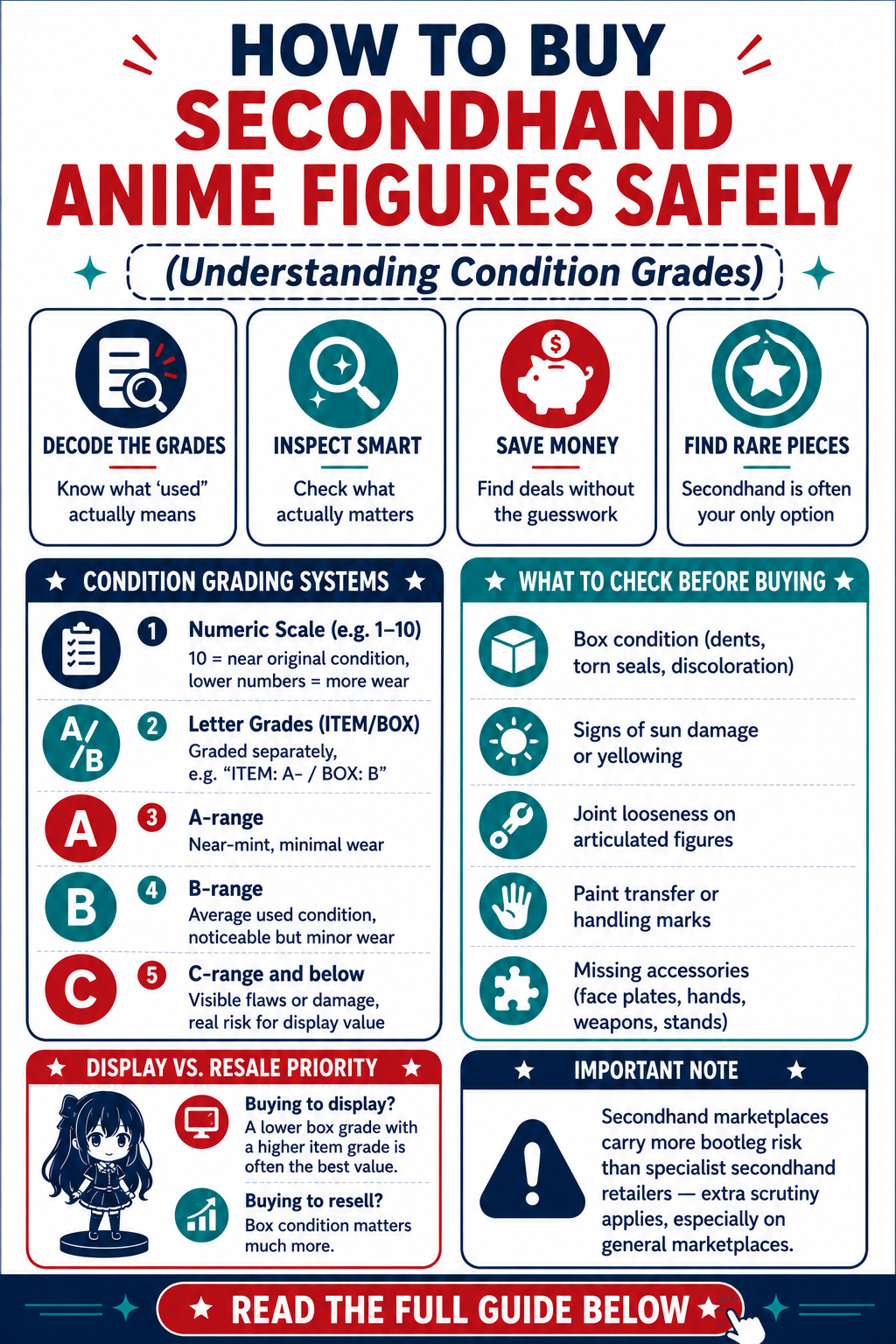
    Numeric scales (e.g., Mandarake’s current system): Mandarake uses a 10-point rating scale across all item categories. A “10” represents essentially original, as-new condition; a “9” has minor imperfections that don’t affect appearance or function; going down the scale, you’ll see increasingly noticeable wear, cosmetic flaws, or functional issues. This applies to the item as a whole, though listings often note box condition separately in the description.

    Letter-based scales (common across other Japanese secondhand shops): Many other Japanese secondhand retailers use a two-part letter grade — one for the item, one for the box — written something like “ITEM: A- / BOX: B.” Under this style of grading:

    • A-range generally means near-mint to excellent condition, with minimal to no visible wear
    • B-range generally means average used condition — noticeable but not significant wear
    • C-range and below generally means visible flaws, damage, or significant wear, and often carries real risk if you’re buying primarily for display value

    A practical tip regardless of scale: if you’re buying to display rather than resell, a lower box grade with a higher item grade is often the best value — box damage frequently drops the price meaningfully more than it affects your actual display experience. If you’re buying with resale or serious collecting value in mind, box condition matters much more, since it directly affects what you could get for it later.

    What to Actually Check Before Buying

    • Box condition specifically: dents, discoloration, torn seals, or missing shrink wrap — even if you don’t care about keeping the box, box condition is often a useful proxy for how carefully the previous owner handled the whole item
    • Signs of sun damage or yellowing: check listing photos closely for uneven coloring, particularly on white or light-colored parts — this kind of damage is permanent once it happens, so it’s worth spotting before you buy, not after
    • Joint looseness on articulated figures: for a used Figma or similar posable figure, ask the seller directly whether joints still hold poses well, since repeated posing by a previous owner can loosen joints over time
    • Paint transfer or handling marks: a slightly “greasy” feel or faint marks where accessories rubbed against the figure during storage are common and usually harmless, but worth knowing about before you buy rather than being surprised on arrival
    • Missing accessories: face plates, extra hands, weapons, and stands are often the first things to go missing from a used figure — confirm what’s actually included, not just what came with the original release

    Where to Buy Secondhand Figures

    • Specialist secondhand retailers (like Mandarake) tend to offer the most transparent, standardized grading and the most reliable descriptions, since condition assessment is core to their business
    • Community marketplaces (MyFigureCollection’s forums and marketplace features, for example) connect you directly with other collectors, who often provide more candid, detailed condition notes than a commercial listing would
    • General marketplaces (eBay, Mercari) can offer good prices but require more of your own diligence — check seller feedback specifically related to figure sales, and don’t hesitate to ask for additional photos before committing

    Frequently Asked Questions

    Is it safe to buy a “used” figure without seeing it in person first? Generally yes, as long as you’re buying from a retailer with a standardized, transparent grading system or a seller with a solid track record — request additional photos if the listing photos don’t show what you need to see clearly.

    Does a lower box grade mean the figure itself is also damaged? Not necessarily — box and item condition are typically graded separately, and it’s common to find a figure in excellent shape with a box that’s simply a bit worn or dented from storage and handling.

    Should I worry about bootlegs when buying secondhand? It’s worth more caution than buying new from an authorized retailer, particularly on general marketplaces rather than specialist secondhand shops. My guide to spotting bootlegs applies just as much to secondhand purchases as new ones.

    Is secondhand a good way to find discontinued or limited figures? Yes — this is genuinely one of the best reasons to buy secondhand, since it’s often the only realistic way to find a figure that’s no longer in production. Just apply extra scrutiny to condition grading and seller reputation for anything you can’t get anywhere else, since a bad purchase on a hard-to-find piece is a bigger loss than on something you could simply reorder.

    Final Thoughts

    Buying secondhand well comes down to understanding that condition grading is a system, not a single word — knowing how item and box grades work separately, checking for the specific issues that matter (sun damage, joint looseness, missing accessories), and matching your grading standards to what you’re actually going to do with the figure (display versus resale) will keep you from unpleasant surprises.

    If you’re building a mixed collection of new and secondhand pieces, it’s worth pairing this with my storage and display guide — proper care matters just as much for a secondhand figure you’re now responsible for as it does for something bought brand new.
  • How to Sell Your Anime Figures Safely (Without Getting Scammed or Underpaid)

    How to Sell Your Anime Figures Safely (Without Getting Scammed or Underpaid)

    Affiliate Disclosure: This post contains affiliate links. If you buy through one of them, I may earn a small commission at no extra cost to you. I only recommend stores I’ve actually ordered from or researched thoroughly — my opinions are my own.

    The Problem: Selling Is a Completely Different Skill Than Buying

    Everything I usually cover on this site is about buying figures well — but eventually, most collectors end up needing to sell a few. Maybe your taste shifted, maybe you’re downsizing, or maybe you just have duplicates from a gift that didn’t quite land. Whatever the reason, selling comes with its own set of risks that buying simply doesn’t: pricing something fairly, avoiding scam buyers, and getting a fragile item safely into someone else’s hands without it arriving broken.

    In my experience, collectors who’ve only ever bought figures tend to underestimate how different selling is — it’s not just buying in reverse. This guide covers where to actually list your figures, how to price them realistically, and how to avoid the scams that specifically target sellers.

    Who This Article Is NOT For

    • If you’re trying to sell a bootleg or recast, knowingly or not, stop and read my guide to spotting fakes first — selling a counterfeit, even unintentionally, can create real problems for you as the seller, not just the original bootleg seller.
    • If you’re expecting to make a profit on figures you bought at retail, it’s worth resetting expectations — most figures depreciate rather than appreciate, and treating a sale as “recovering some of what you spent” is usually more realistic than expecting a profit.
    • If you only have one or two figures to sell, the lower-effort options (local Facebook groups, a quick Mercari listing) are probably more worth your time than setting up accounts on multiple platforms — save the heavier options below for larger collections.

    How to Approach Selling

    1. Know what you actually have before you price it. Condition, box status, and whether it’s a genuinely limited piece all affect price — my guide to identifying real limited editions is useful background here.

    2. Match the platform to the size of what you’re selling. A single figure and a fifty-piece collection call for different approaches.

    3. Protect yourself from the scams that specifically target sellers, which look different from the scams that target buyers.

    Where to Actually Sell

    PlatformBest ForTradeoffs
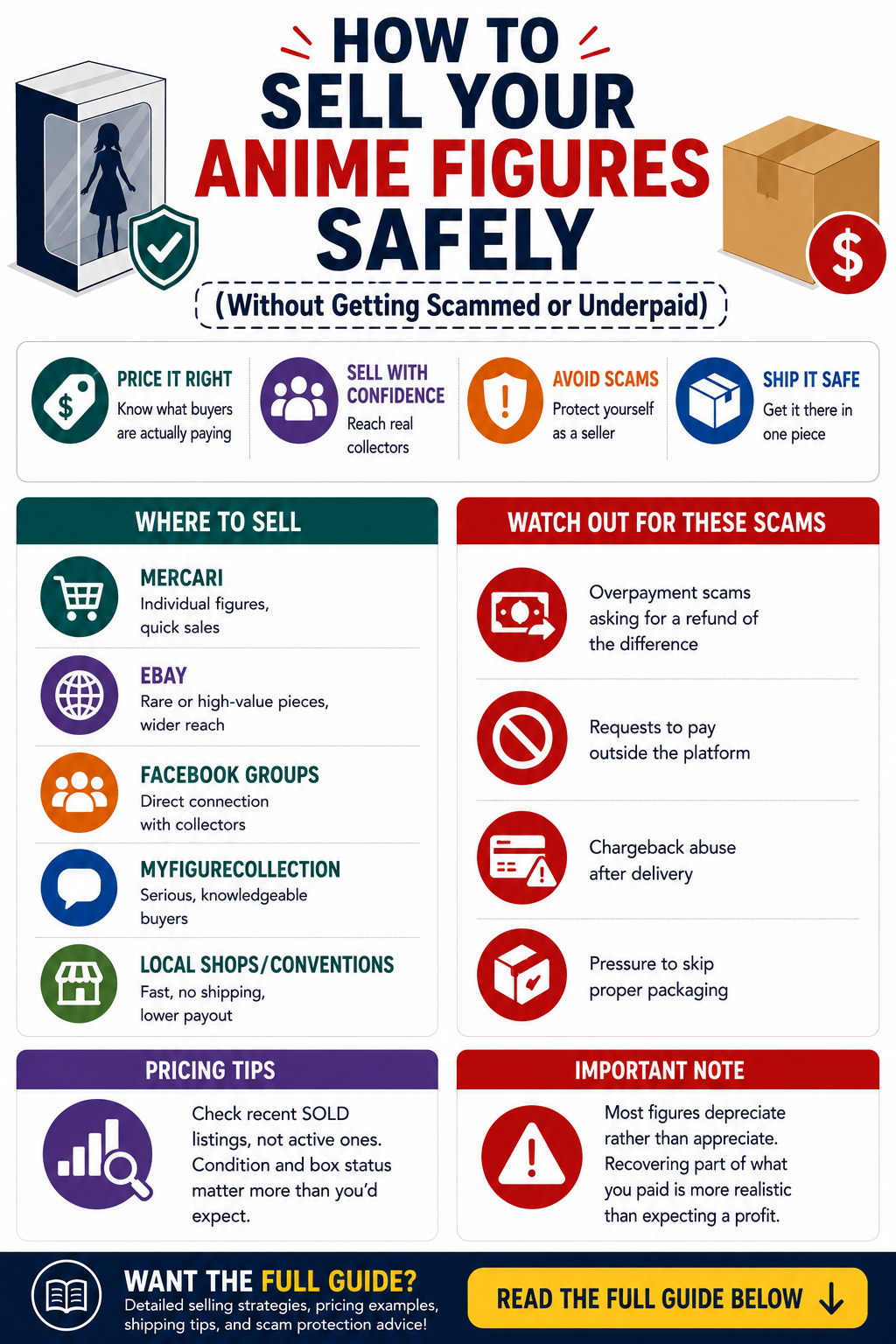
    MercariIndividual figures, relatively quick salesFees apply; pricing can be inconsistent buyer-to-buyer
    eBayRare or high-value pieces, broader buyer reachListing/selling fees; more setup effort for a single item
    Facebook groups / collector communitiesDirect connection with engaged collectors, sometimes better pricesRequires more manual back-and-forth; payment safety is entirely on you to manage
    MyFigureCollection (MFC) marketplace/forumsReaching serious, knowledgeable collectorsSmaller audience than eBay, but often better-informed buyers
    Local shops or conventionsFast, no shipping hassle, immediate cashTypically the lowest payout, since the shop needs their own margin

    A general pattern worth knowing: community-based options (Facebook groups, MFC) sometimes yield better prices than broad marketplaces, since you’re reaching people who specifically collect and understand what they’re buying — but they also require more manual effort per sale than a straightforward marketplace listing.

    Pricing Your Figures Realistically

    • Check recent sold listings, not active ones. Active listings show what sellers are asking, not what buyers are actually paying — sold/completed listings on eBay or Mercari give a much more accurate picture.
    • Condition matters more than you’d expect. A figure with a well-preserved box, no dust, and no handling wear will sell for noticeably more than the same figure in rough shape — box condition specifically is something collectors care about a lot.
    • Know whether it’s genuinely limited. If you’re not sure, my breakdown of limited edition terminology can help you figure out whether a piece is likely to command a premium or whether “limited” was more marketing language than real scarcity.
    • Price to sell if you actually want it gone. Pricing at what you originally paid, or above, often means a listing sits for months. If your goal is actually clearing space rather than maximizing every dollar, pricing modestly below recent sold comparables moves things faster.

    Writing a Listing That Sells

    • Photograph in good, even lighting, ideally without harsh flash that washes out paint detail — natural light near a window works well for most figures
    • Show multiple angles, including close-ups of any damage, discoloration, or wear — being upfront about condition builds trust and reduces disputes later
    • Include the box in photos if you still have it, since box condition is a real factor in how collectors value a piece
    • Be specific and honest in the description — exact release name, manufacturer, and any known flaws. Vague listings get fewer serious offers, not more

    Shipping Safely (So It Arrives in One Piece)

    • Individually wrap and secure parts that could shift during transit, especially removable accessories or delicate extensions like weapons or flowing hair
    • Use snug-fitting boxes with real padding — bubble wrap or packing paper, not just loose space that lets the figure shift around
    • Double-box for extra protection on higher-value pieces, especially scale figures — an inner box with the figure and padding, placed inside a larger outer box with additional cushioning
    • Buy shipping insurance for anything valuable enough that a loss would actually hurt, since standard carrier liability rarely covers the full value of a rare figure

    Avoiding Scams That Target Sellers

    Selling comes with a different set of scam risks than buying, and it’s worth knowing what to watch for specifically:

    • Overpayment scams: a buyer sends more than the asking price and asks you to refund the difference — the original payment is often fraudulent or later reversed, leaving you out both the figure and the “refund” you sent
    • Requests to move off-platform: a buyer asking to pay outside your selling platform’s official payment system removes your dispute protection entirely — legitimate buyers rarely have a strong reason to insist on this
    • Chargeback abuse: a buyer claims an item never arrived or was “not as described” after receiving it, then requests a refund through their payment provider — tracking numbers and delivery confirmation are your main protection here, so always ship with tracking
    • Payment before you’re ready to ship: don’t feel pressured into skipping your normal packaging process because a buyer is impatient — a rushed, poorly protected shipment is a real risk to the item itself, separate from any scam concern

    Frequently Asked Questions

    Should I expect to make a profit selling my figures? Generally no — most figures depreciate rather than appreciate, so recovering a reasonable portion of what you paid is a more realistic expectation than turning a profit, except for the genuinely rare pieces that do hold or increase in value.

    Is it safe to accept payment through Facebook Messenger or similar direct methods? This carries more risk than a platform with built-in buyer/seller protection, since you’re relying entirely on the payment method’s own dispute process (or lack of one). If you do sell through community groups, using a payment method that offers some form of seller protection is worth prioritizing over convenience.

    Does it matter if I don’t have the original box anymore? It affects price, but it doesn’t make the figure unsellable — just expect a lower price than an equivalent item with box included, since box condition is something serious collectors specifically look for.

    How do I know if I’m accidentally selling a bootleg I didn’t know was fake? If you bought the figure secondhand or from an unfamiliar source originally, it’s worth checking it against my guide to spotting bootlegs before listing it for sale, particularly if you never fully verified authenticity when you first acquired it.

    Final Thoughts

    Selling figures well comes down to the same theme as buying them well: be accurate, be patient, and don’t skip the steps that protect you. Price based on real sold data rather than wishful thinking, photograph and describe honestly, package like the item actually matters, and stay alert to the scam patterns that specifically target sellers rather than buyers.

    If you’re selling because your collecting priorities have shifted rather than stepping away from the hobby entirely, it might be worth revisiting my guide to choosing between Nendoroid, Figma, and scale figures — sometimes clearing out figures that no longer fit your collection is really just making room for the ones that do.