Affiliate Disclosure: This post contains affiliate links. If you buy through one of them, I may earn a small commission at no extra cost to you. I only recommend stores I’ve actually ordered from or researched thoroughly — my opinions are my own.
The Problem: “Declared Value” Sounds Like Insurance, But It Usually Isn’t
Here’s a distinction that catches a lot of people off guard, whether you’re receiving a figure or shipping one out: what carriers call “declared value” and what you’d normally think of as “insurance” are often two genuinely different things. Major carriers are explicit about this in their own terms — declared value is a cap on their liability if they’re proven at fault, not a guarantee that you’ll be compensated if something goes wrong.
In my experience, this distinction matters most in the exact moment you don’t want to be learning it: after a figure has already arrived damaged, or after you’ve shipped one out and the buyer is asking where their compensation is. This guide covers what actual protection exists, from both sides of the transaction.
Who This Article Is NOT For
- If you’re buying exclusively from retailers with strong buyer protection policies and haven’t had a damage issue, this is more of a “know before it happens” reference than an urgent read.
- If you’re not currently selling figures, the seller-side section won’t apply to you directly — check my guide to selling figures safely if that changes.
- If you’re looking for packaging advice specifically, that’s covered in more depth in my selling guide — this article focuses on what happens after something goes wrong, not how to prevent it.
The Key Distinction: Declared Value vs. Real Insurance
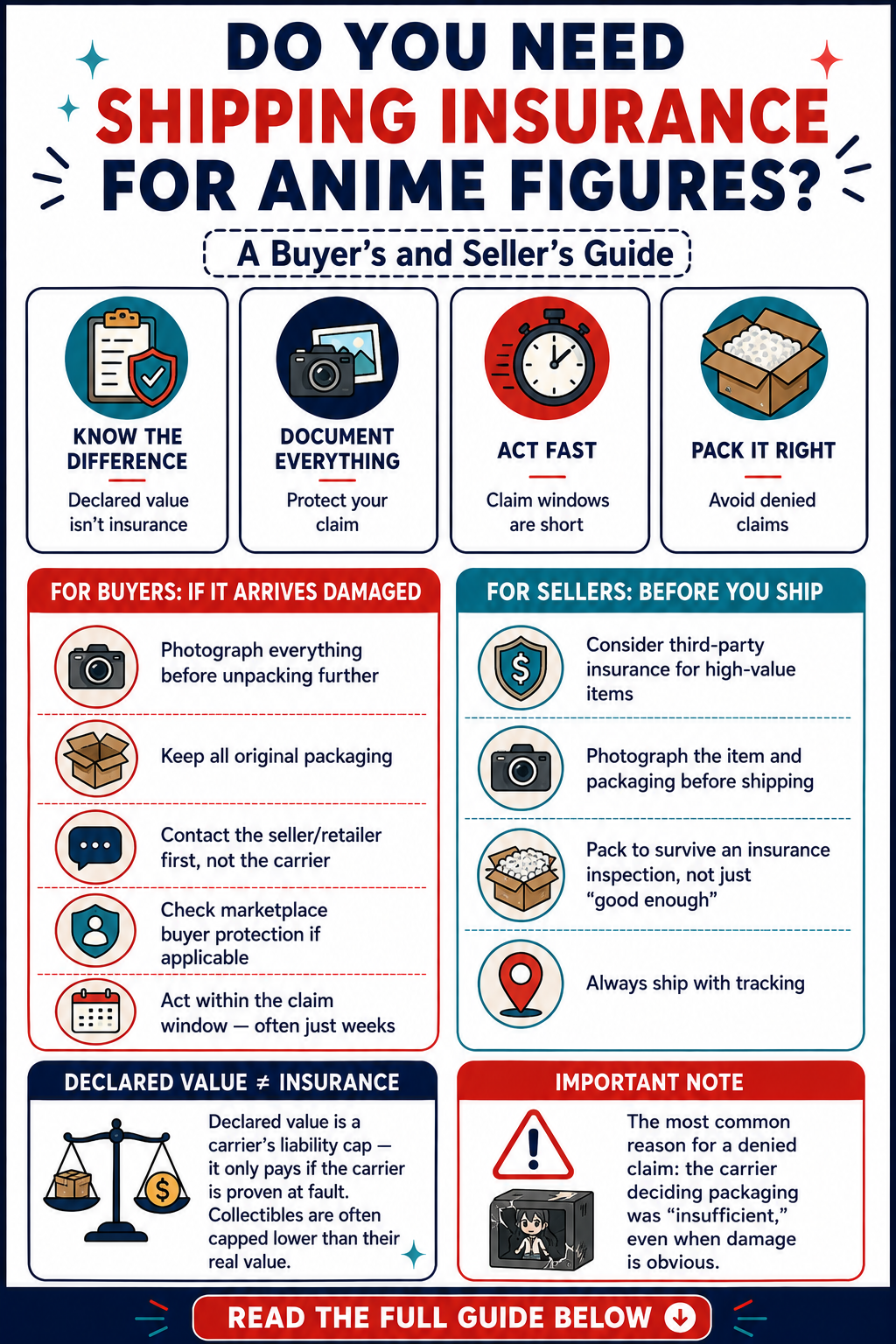
Declared value is a carrier’s maximum liability for a shipment, and it only pays out if the carrier is proven to be at fault for the damage or loss. Major carriers state this directly — it is explicitly not insurance, and coverage is often capped at a low amount specifically for collectibles, regardless of how much you declare.
True shipping insurance is a separate product, sometimes purchased through the carrier’s affiliated insurance option, sometimes through a third-party insurer, and it generally offers broader, more reliable coverage than declared value alone — particularly for items in categories carriers commonly exclude or cap.
Why this matters for figures specifically: collectibles are frequently singled out in carrier terms with reduced maximum declared values compared to general merchandise, precisely because they’re harder to independently verify the value of. A $300 scale figure shipped with a high declared value doesn’t necessarily mean you’re covered for the full $300 if something goes wrong.
For Buyers: What Protection Actually Exists
1. Check your retailer’s own policy first, before relying on carrier-level protection. Established retailers often have their own procedures for damaged-in-transit items, separate from whatever the shipping carrier itself offers — this is frequently your fastest and most reliable path to a resolution.
2. Photograph everything immediately upon arrival, before you’ve even fully unpacked the figure — the outer box, the inner packaging, and the damage itself. Carriers and retailers alike often require this documentation, and some will deny claims if the outer box shows no visible damage, even if the contents were harmed by rough handling during transit.
3. Keep all original packaging until the issue is resolved. Claims processes frequently require the ability to inspect the original box and packing materials — discarding them early can complicate or invalidate a claim.
4. Act quickly. Claim windows are often surprisingly short — sometimes just a few weeks from delivery — so don’t sit on a damaged shipment assuming you have unlimited time to report it.
5. Understand that “insufficient packaging” is a common denial reason. This is frustrating when you weren’t the one who packed it, but it’s worth knowing that a claim can be denied if the carrier determines the item wasn’t adequately protected for transit — this is generally an argument between the shipper and the carrier, so a paper trail with your retailer matters more than a fight with the carrier directly.
For Sellers: Protecting Yourself When Shipping Out
If you’re selling figures, the insurance conversation flips — you’re the one deciding whether to add it and how to handle a dispute if the buyer claims damage.
- Consider third-party insurance for higher-value items, rather than relying solely on a carrier’s declared value option, given how often collectibles are capped or excluded from full carrier liability.
- Photograph the item and packaging before you ship it. This protects you if a buyer later disputes the condition it arrived in — having your own “before” documentation is genuinely valuable if a dispute happens.
- Pack to a standard that would survive an insurance inspection, not just “good enough.” Since claims can be denied over inadequate packaging, packing well protects both your buyer’s item and your own ability to file a successful claim if the carrier damages it.
- Always ship with tracking, regardless of item value — this is your primary protection against claims that an item never arrived at all, which is a separate issue from physical damage but comes up just as often.
What to Do If a Figure Arrives Damaged
- Don’t discard any packaging until the situation is resolved
- Photograph the damage, the inner packaging, and the outer box from multiple angles before doing anything else
- Contact the seller or retailer first, rather than going straight to a carrier claim — many retailers have their own resolution process that’s faster than a formal carrier claim
- If buying from a marketplace, most major platforms have buyer protection policies for items that arrive significantly damaged or not as described — this is often a more realistic path than pursuing the shipping carrier directly, since you as the buyer typically weren’t the one with a carrier account to file through in the first place
- Escalate to a carrier claim only if the retailer or platform can’t resolve it, and expect to provide the documentation described above
Frequently Asked Questions
Is “declared value” the same thing as insurance? No — carriers are explicit that declared value is a liability cap that only pays out if they’re proven at fault, not a guarantee of compensation. True insurance, whether through the carrier or a third party, generally offers broader protection.
Why would a damage claim get denied even with obvious damage? The most common reason is a carrier determining the packaging was inadequate for transit, or the outer box showing no visible external damage despite internal contents being harmed — both are frustrating but genuinely common reasons for denial.
Should I buy extra insurance on an expensive scale figure? It’s worth considering, particularly since collectibles are often capped at a reduced declared value by major carriers regardless of the item’s actual worth. For a high-value piece, third-party insurance can offer more realistic protection than relying on carrier declared value alone.
What should I do first if my figure arrives broken? Photograph everything before unpacking further, keep all packaging, and contact the seller or retailer directly rather than assuming you need to deal with the shipping carrier yourself — this is usually the faster and more reliable path to a resolution.
Final Thoughts
The uncomfortable reality is that “declared value” and genuine insurance protection aren’t the same thing, and collectibles specifically tend to get less favorable treatment from major carriers than general merchandise. Whether you’re buying or selling, the practical defense is the same: document everything, keep your packaging, act quickly, and go through your retailer or marketplace’s own resolution process before assuming a carrier claim is your only option.
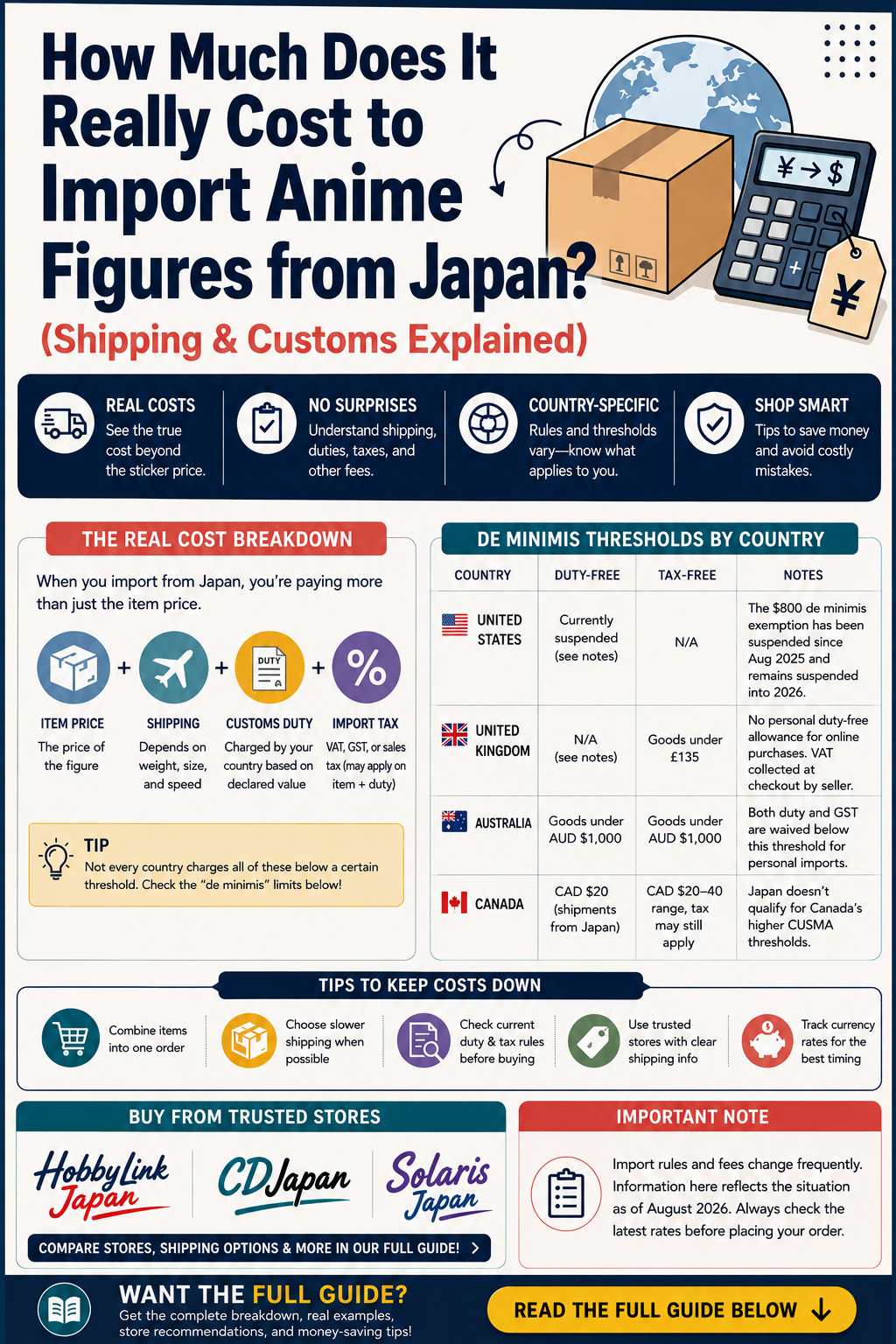
If you’re building your overall buying confidence, it’s worth pairing this with my breakdown of shipping and customs costs and comparison of trusted retailers — buying from a retailer with a solid track record on damaged shipments is worth more in practice than any amount of after-the-fact insurance paperwork.