Affiliate Disclosure: This post contains affiliate links. If you buy through one of them, I may earn a small commission at no extra cost to you. I only recommend stores I’ve actually ordered from or researched thoroughly — my opinions are my own.
The Problem: You Love a Figure, But You Wish One Small Thing Were Different
Sometimes a figure is nearly perfect except for one detail — a paint job that doesn’t quite match the anime’s actual color palette, a hairstyle you’d love to see in a different color, or just an itch to make something in your collection genuinely one-of-a-kind. This is where customizing and repainting come in, and it’s a much more approachable hobby than it might look from the outside.
In my experience, the biggest barrier for new customizers isn’t skill — it’s the fear of ruining something. This guide covers what customizing actually involves, what to practice on first, and how to approach it without risking a figure you’d actually be upset to lose.
Who This Article Is NOT For
- If you’re not interested in a hands-on hobby beyond collecting, that’s a completely valid preference — there’s no obligation to customize anything, and plenty of collectors are perfectly happy with figures exactly as they arrive.
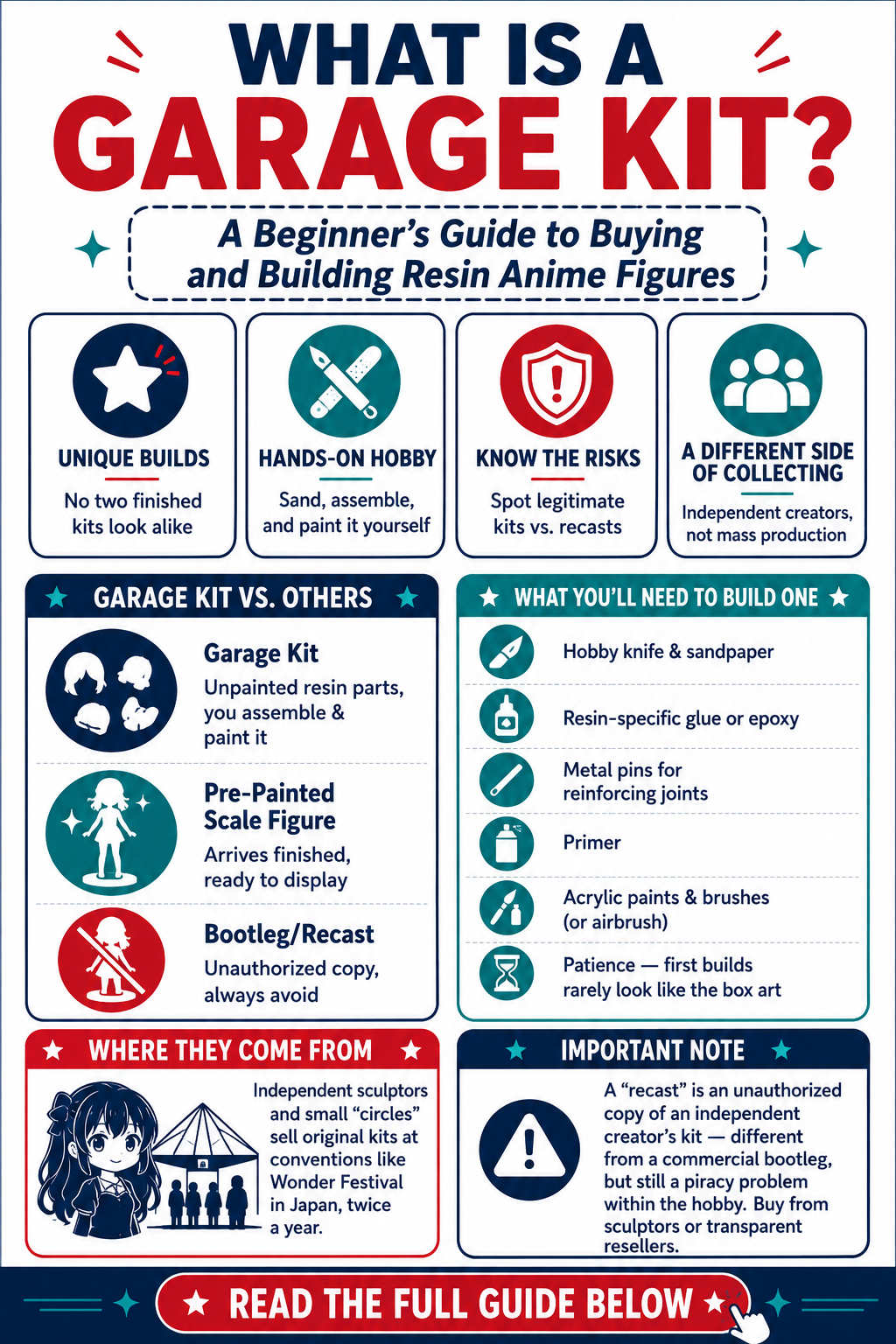
- If you haven’t read my garage kit guide yet and you’re interested in building from scratch rather than modifying an existing figure, that’s a related but distinct hobby worth reading about separately.
- If your first instinct is to practice on an expensive or sentimentally important figure, please don’t — the advice below is specifically about avoiding that mistake.
What “Customizing” Actually Covers
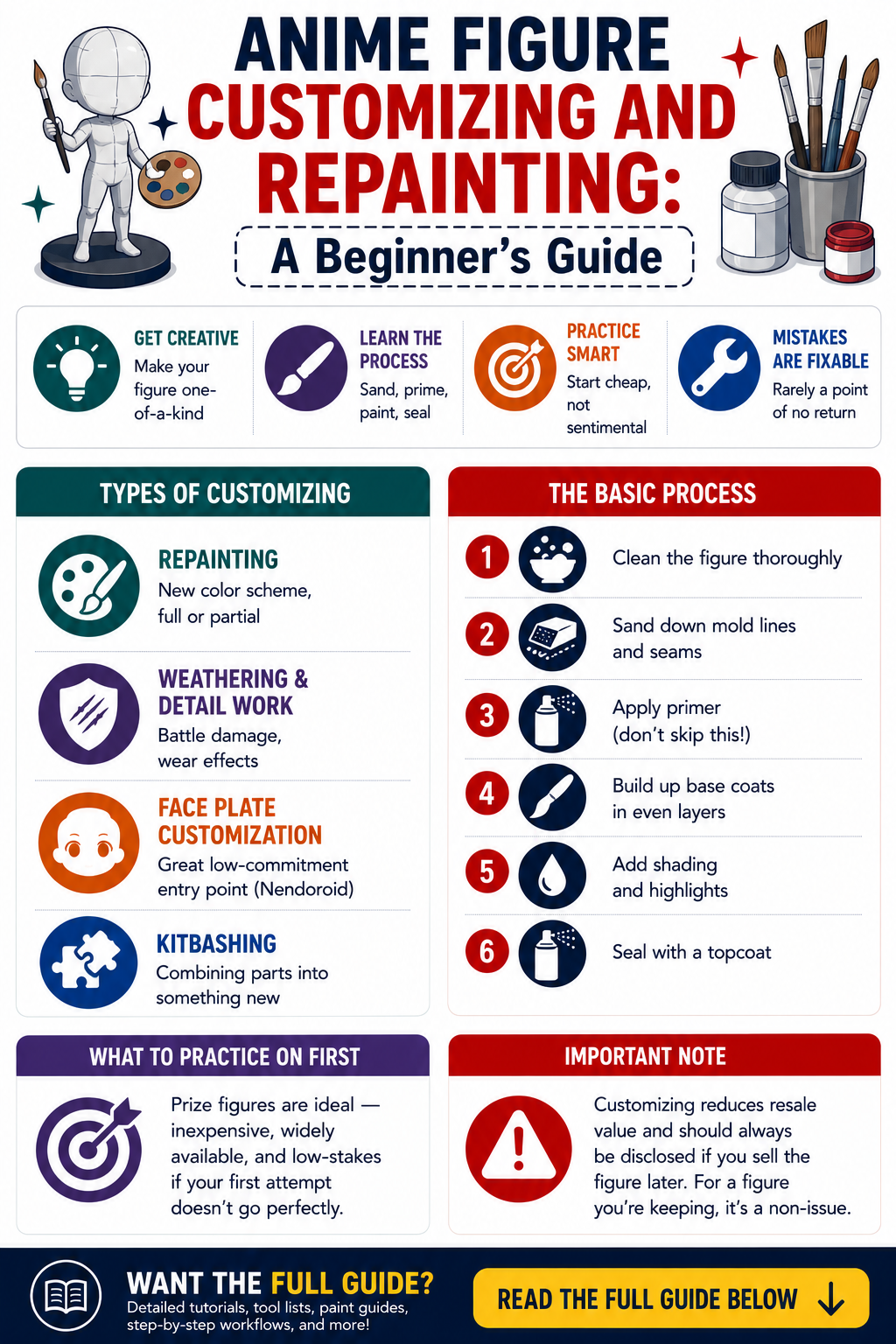
Repainting means stripping some or all of a figure’s original paint and reapplying a new color scheme — sometimes to correct an inaccurate factory paint job, sometimes for a completely original look.
Weathering and detail work adds effects like battle damage, dirt, or wear that the original sculpt and paint job didn’t include, without necessarily doing a full repaint.
Face plate and part customization is common specifically with Nendoroid figures — customizing or hand-painting additional face plates, or modifying hair pieces, is a lower-commitment entry point than a full scale figure repaint.
Kitbashing involves combining parts from multiple figures or kits into something new — less about improving a single figure and more about building something that doesn’t exist as an official release.
Tools You’ll Actually Need
- Fine-grit sandpaper or sanding sticks, for smoothing mold lines and rough spots before painting
- Primer, to help paint adhere evenly to the figure’s surface — skipping this step is one of the most common reasons a repaint doesn’t hold up well
- Acrylic paints, generally preferred for figure work over other paint types, along with a mixing palette for custom shades
- A quality fine-tip brush (often labeled around size 0), since eyes and fine detail work demand more precision than a general-purpose brush
- A sealant or topcoat, applied after painting to protect the finish
- Good, consistent lighting, ideally a dedicated lamp — detail work is much harder to judge accurately under poor lighting
- Mild detergent and water, for washing the figure before you start, to remove manufacturing residue and oils that can interfere with paint adhesion
The General Process (Overview, Not a Full Tutorial)
- Clean the figure thoroughly with mild detergent and water, then let it dry completely
- Sand down any visible mold lines or rough seams left over from manufacturing
- Apply primer to create a surface the paint will actually hold onto
- Apply base coats, building up color in even layers rather than one thick coat
- Add shading and highlights to bring depth and dimension to the finished look
- Seal the finished paint job with a topcoat to protect it from handling and display wear
This is a genuine skill that improves with repetition — don’t expect your first attempt to look like the polished examples you’ll see from experienced customizers online.
What to Practice On First
This is the single most important piece of advice in this entire guide: don’t practice on a figure you’d be upset to lose.
Prize figures are genuinely ideal practice material — they’re inexpensive, widely available, and losing one to a botched first attempt costs you very little. Once you’re comfortable with the basic process on a low-stakes figure, you’ll have a much better sense of whether you want to attempt something you actually care more about.
For Nendoroid-scale customization specifically, an extra or duplicate face plate is a lower-commitment way to practice fine detail work without touching the main figure at all.
Common Beginner Mistakes (and Why They’re Rarely Fatal)
- Skipping primer is one of the most common reasons a paint job doesn’t hold up — it’s tempting to skip since it doesn’t visually change much in the moment, but it matters more than it looks like it should.
- Rushing the process when frustrated. If a session isn’t going well, stepping away and returning later tends to produce better results than pushing through frustration — the fatigue in the moment is usually the actual problem, not the figure itself.
- Assuming a mistake ruins the figure permanently. Most paint issues are genuinely recoverable through sanding, re-priming, and repainting — very few mistakes at the beginner stage are actually unfixable.
- Comparing your first attempt to experienced customizers’ finished work. Skill here builds through repetition, not talent you either have or don’t — a rough first attempt is a normal part of the process, not a sign you’re not cut out for it.
A Note on Value and Authenticity
Customizing or repainting a figure changes it permanently — it’s worth knowing this affects resale value, and a customized figure should always be clearly disclosed as such if you ever sell it later, since misrepresenting a customized piece as factory-original would be misleading to a buyer. This isn’t a reason to avoid customizing — it’s just a reason to be upfront about it, the same way you’d want a seller to be upfront with you.
Frequently Asked Questions
Is repainting figures hard to learn? The fundamentals are genuinely learnable by a complete beginner, and visible improvement typically shows up within the first couple of attempts. The main requirement is patience with preparation steps (cleaning, sanding, priming) that don’t feel exciting but matter enormously for the final result.
Will customizing a figure ruin its value? It will generally reduce resale value compared to an untouched factory figure, since collectors buying secondhand are often specifically looking for original condition. This matters most for figures you might sell later — for a figure you plan to keep and display, it’s a non-issue.
What should my first customization project be? A cheap prize figure or a spare Nendoroid face plate — something inexpensive enough that a mistake doesn’t sting. Save any figure you’re genuinely attached to for after you’ve built some basic confidence and skill.
Can I undo a repaint if I don’t like the result? Often yes, through careful paint removal, sanding, and re-priming, though the exact process depends on the paint type and how much the original surface was affected. It’s rarely a true point of no return, especially for a beginner-stage mistake.
Final Thoughts
Customizing and repainting turn figure collecting from something purely acquisitive into something genuinely creative — but it’s a skill worth building deliberately rather than diving in on something you’d hate to lose. Start with a cheap prize figure or a spare part, accept that your first attempt won’t match what experienced customizers post online, and treat mistakes as recoverable rather than catastrophic.
If you enjoy this hands-on side of the hobby, it’s worth also reading my guide to garage kits — building and painting a kit from scratch is a natural next step once you’re comfortable customizing existing figures.