タグ: Beginner Tips

  • The Best Type of Figure for Your Favorite Anime Genre (Battle, Slice-of-Life, and More)

    The Best Type of Figure for Your Favorite Anime Genre (Battle, Slice-of-Life, and More)

    Affiliate Disclosure: This post contains affiliate links. If you buy through one of them, I may earn a small commission at no extra cost to you. I only recommend stores I’ve actually ordered from or researched thoroughly — my opinions are my own.

    The Problem: The “Right” Figure Type Depends on What You Actually Watch

    I’ve written before about the practical differences between Nendoroid, Figma, and scale figures — price, posability, size. But there’s a layer on top of that practical comparison that matters just as much: what kind of anime you actually love changes which figure type tends to suit it best.

    In my experience, this is genuinely one of those “it depends” situations, but not in a frustrating way — once you know your favorite genre’s general personality, the right figure type becomes a lot more obvious. A static, cute chibi figure does something completely different for a slice-of-life character than it does for someone mid-battle in a shonen series, and neither is wrong — they’re just suited to different kinds of shows.

    Who This Article Is NOT For

    • If you only care about one specific character, regardless of genre, buy the figure of that character in whatever type suits your budget and taste — genre patterns are a helpful starting point, not a rule.
    • If you haven’t read my Nendoroid vs Figma vs Scale Figure breakdown yet, it’s worth reading that first — this article builds on those basics rather than repeating them.
    • If you collect across every genre equally, that’s genuinely one of the best positions to be in as a collector (mine included) — feel free to treat this as a buffet rather than a strict guide.

    How Genre Actually Influences Figure Choice

    1. How dynamic the source material is. Shows built around movement, combat, or dramatic poses tend to translate better into posable figures — static pieces can feel like they’re missing the point.

    2. The visual tone of the character designs. Some genres lean into exaggerated, expressive character designs that suit chibi styles beautifully; others rely on grounded, detailed designs that shine more in realistic scale sculpts.

    3. How you’re likely to actually display it. A genre built around big emotional or dramatic moments often benefits from a scale figure capturing one iconic scene; a genre built around everyday charm often benefits from a rotating cast of smaller figures instead.

    Quick Reference: Genre to Figure Type

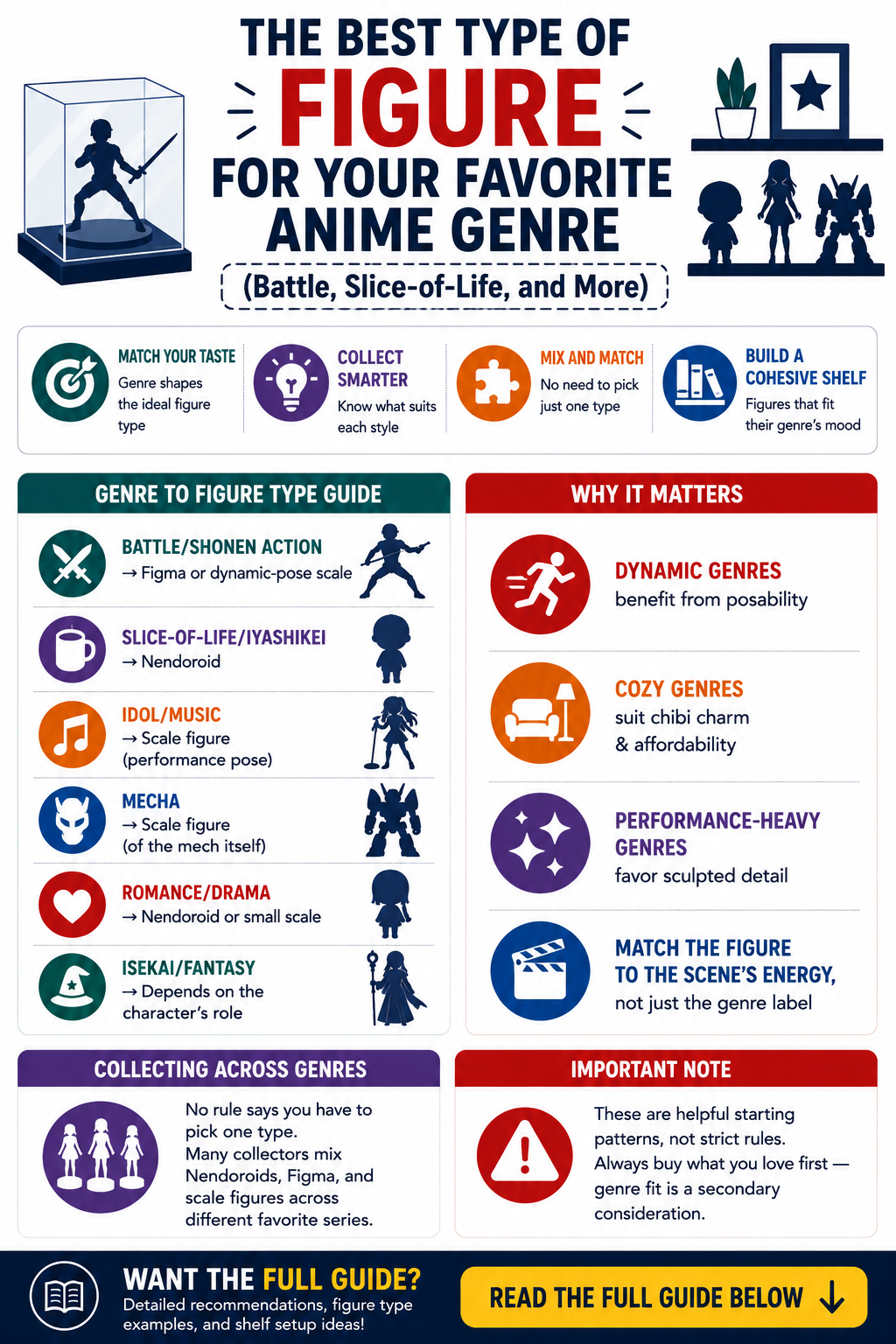
    GenreBest FitWhy
    Battle / Shonen ActionFigma, or dynamic-pose scale figuresPosability and dramatic sculpted poses do justice to combat-heavy characters
    Slice-of-Life / IyashikeiNendoroidChibi charm suits the genre’s cozy, low-stakes tone; affordable enough to collect a whole cast
    Idol / MusicScale figures, often in performance posesThese series are built around visually striking stage moments that scale figures capture well
    MechaScale figures (often of the mecha itself, not just the pilot)Mechanical detail work is a major part of the appeal, and static display suits large, complex models
    Romance / DramaNendoroid or smaller scale figuresCharacter-focused, emotionally driven shows often suit a more intimate, expressive figure style
    Isekai / Fantasy AdventureMix of Figma and scale, depending on the specific character’s roleWide variance within the genre — action-heavy protagonists suit Figma, iconic “hero shot” moments suit scale

    Battle and Action Series: Lean Into Posability

    If your favorite shows are built around fight scenes, tournaments, or big dramatic confrontations, a static figure genuinely underdelivers on what made you love the character in the first place. This is where Figma earns its reputation — the articulation exists specifically to let you recreate the kind of dynamic moment that defines these characters.

    That said, don’t rule out scale figures entirely here. A lot of manufacturers specifically sculpt action-series scale figures in a dynamic mid-combat pose rather than a neutral stance — you lose posability, but gain a level of sculpted detail (flowing capes, motion lines, impact effects) that a Figma’s engineered joints can’t fully replicate. If you have a single defining character you love, a well-sculpted dynamic-pose scale figure can be a genuine showpiece.

    Slice-of-Life and Iyashikei: Lean Into Charm and Collectability

    Shows built around everyday moments, gentle humor, and cozy atmospheres tend to suit Nendoroids remarkably well. The chibi style matches the genre’s general visual warmth, and because these shows are often ensemble-focused, Nendoroids’ relative affordability makes it realistic to actually collect the whole main cast rather than picking just one favorite.

    This is also a genre where interchangeable face plates genuinely add value — a lot of slice-of-life charm comes from small expressive moments, and being able to swap a figure’s expression to match your mood (or the scene you’re recreating) fits the tone of these shows particularly well.

    Idol and Music Series: Lean Into Performance Moments

    These series are usually built around visually spectacular stage performances, elaborate costumes, and specific iconic scenes — exactly the kind of thing a scale figure, sculpted in a single striking pose, captures better than an articulated alternative. Costume and hair detail tend to be a big part of what makes these characters visually distinctive, and that level of sculpted and painted detail is squarely a scale figure’s strength.

    Mecha: Lean Into the Machine, Not Just the Pilot

    If mecha is your genre, don’t overlook figures of the mechs themselves, not just their pilots. This is a genre where the machine design is often as central to the appeal as any individual character, and scale model kits or figures of the mecha itself can be some of the most satisfying pieces to display — particularly for anyone who also enjoys the more hands-on side of the hobby covered in my garage kit guide.

    Romance and Character Drama: Lean Into Intimacy

    Shows centered on close character relationships and emotional nuance tend to suit smaller, more personal figure formats — Nendoroids for a warmer, approachable feel, or smaller scale figures for something a bit more detailed without going to a large, imposing showpiece size. These genres are less about dramatic action poses and more about capturing a character’s personality, which smaller formats tend to do well.

    Isekai and Fantasy Adventure: It Depends on the Specific Character

    This genre spans a wide range — some isekai leans heavily into action and power fantasy (suiting Figma or dynamic scale figures), while other entries lean more into worldbuilding, comedy, or slower-paced adventure (suiting Nendoroid or standard-pose scale figures). Rather than a single genre-wide recommendation, it’s worth thinking about which specific character or moment you’re drawn to and matching the figure type to that scene’s energy rather than the genre label alone.

    Building a Collection Across Multiple Genres

    If, like a lot of collectors (myself included), your taste spans several genres, there’s no need to pick one figure type and stick with it exclusively. A shelf mixing a couple of Nendoroids from a slice-of-life favorite, a dynamic Figma from a battle series, and one standout scale figure as a centerpiece is a completely normal, and honestly pretty common, way to collect. The genre-to-type patterns above are a useful starting point for a specific purchase decision, not a rule about how your whole collection needs to look.

    If you’re building out a mixed collection like this, it’s worth revisiting my storage and display guide for tips on protecting a varied shelf that includes both posable and static pieces, since they have slightly different care considerations.

    Frequently Asked Questions

    Is it “wrong” to buy a Nendoroid of a serious battle series character? Not at all — plenty of intense action series also get Nendoroid releases, and the contrast between the character’s serious source material and their chibi figure can be part of the appeal. These are general patterns based on what tends to suit a genre well, not hard rules.

    Which genre tends to have the most figure variety to choose from? Popular, long-running battle/shonen series tend to have the largest catalogs across all figure types, simply due to how much merchandise gets produced for major franchises. Niche or newer series in any genre may have more limited options regardless of genre fit.

    Should I buy based on genre fit or just what I love most? What you love most, always — genre patterns are meant to help you decide which type of figure to get for a character you already want, not to talk you out of a figure that doesn’t fit the “expected” mold for its genre.

    Final Thoughts

    There’s no strict rulebook here — plenty of great figures break these patterns entirely, and the best figure for you is ultimately the one of a character and moment you actually love. But if you’re stuck deciding between a Nendoroid, Figma, or scale figure for a specific character, thinking about your favorite genre’s general personality — dynamic and action-driven, or cozy and character-focused — is a genuinely useful starting point.

    If you haven’t already, my full breakdown of Nendoroid vs Figma vs scale figures and comparison of trusted Japan-based figure stores are the natural next steps once you’ve settled on a direction.
  • What Is a Garage Kit? A Beginner’s Guide to Buying and Building Resin Anime Figures

    What Is a Garage Kit? A Beginner’s Guide to Buying and Building Resin Anime Figures

    Affiliate Disclosure: This post contains affiliate links. If you buy through one of them, I may earn a small commission at no extra cost to you. I only recommend stores I’ve actually ordered from or researched thoroughly — my opinions are my own.

    The Problem: “Garage Kit” Sounds Like a Red Flag, But It Isn’t (Usually)

    If you’ve spent any time browsing figure marketplaces, you’ve probably come across a listing for a “garage kit” and felt a little suspicious of it — an unpainted, unassembled resin figure, sold outside the usual retailers, sometimes at a price that seems too good to be true for the detail shown in the photos. After everything I’ve covered about spotting bootlegs, that instinct to be cautious is a good one.

    But garage kits are a completely different, legitimate category of the hobby — they’re just built differently, sold differently, and require a different kind of buyer than the pre-painted figures I usually cover on this site. This guide explains what they actually are, how to tell a legitimate one from a piracy problem specific to this corner of the hobby, and whether they’re worth getting into.

    Who This Article Is NOT For

    • If you want a figure that arrives ready to display straight out of the box, garage kits are not for you — by definition, they require assembly and painting. Stick with Nendoroid, Figma, or pre-painted scale figures instead.
    • If you don’t have any interest in a hands-on hobby beyond collecting, that’s a completely reasonable preference, and garage kits genuinely aren’t for everyone — there’s no shame in preferring finished figures.
    • If you’re specifically looking for character variety and guaranteed availability, garage kits are often small-run, sometimes one-off releases sold at a single convention — this isn’t a category where you can reliably find any character you want on demand.

    What Actually Defines a Garage Kit

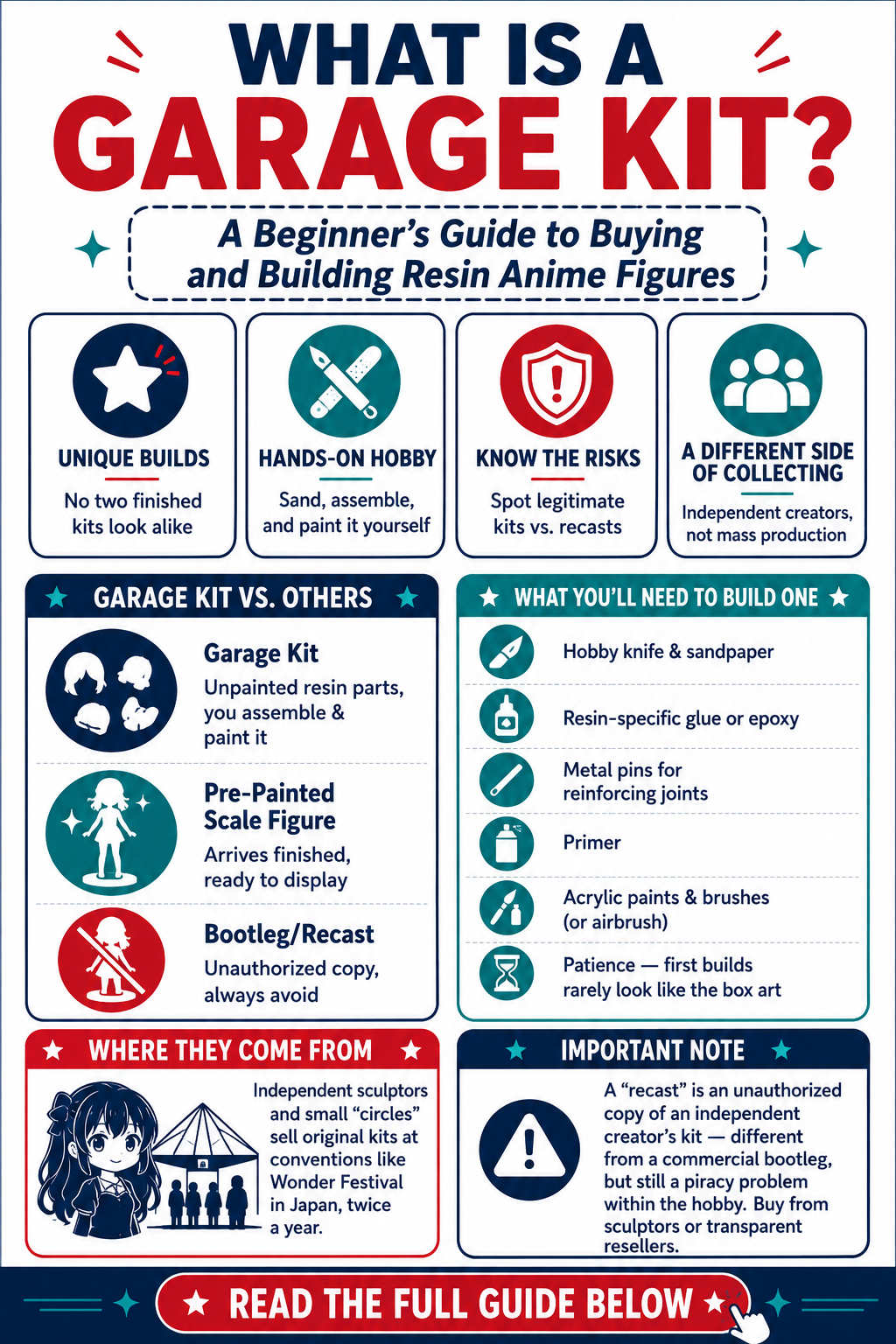
    1. It’s unpainted and unassembled. This is the core, defining trait — you receive separate resin parts, not a finished figure.

    2. It’s typically made in polyurethane resin, not the PVC/ABS plastic used in mass-produced commercial figures, which is part of why the sculpting can achieve extremely fine detail.

    3. It’s usually produced independently, by an individual sculptor or small “circle” (the hobbyist term for a small creative group), rather than by a major manufacturer like Good Smile Company or Kotobukiya.

    Garage Kit vs. Pre-Painted Figure vs. Bootleg: What’s the Difference?

    Garage KitPre-Painted Scale FigureBootleg / Recast
    Condition on arrivalUnpainted, unassembled resin partsFully assembled and paintedFully assembled and painted (imitation)
    Who makes itIndependent sculptor or small “circle”Major manufacturer (Alter, Kotobukiya, etc.)Unauthorized copier
    Official/licensed?Often unlicensed fan work, though some are licensedLicensed by the IP holderNever licensed — always unauthorized
    Where it’s soldConventions (Wonder Festival), secondhand marketplaces, specialty importersAuthorized retailersMarketplace listings, often disguised as genuine
    Buyer’s effort requiredSignificant — sanding, gluing, priming, paintingNoneNone
    Legitimacy concernGenerally accepted as part of dojin (fan-creator) culture, though a real piracy problem exists within the hobby (see below)None, if bought from an authorized sourceAlways illegitimate

    Where Garage Kits Actually Come From

    Garage kits trace back to hobbyists in Japan in the early 1980s producing small-batch resin models — often of characters or subjects that official manufacturers weren’t making at the time — literally out of home workshops, which is where the name comes from. Over time, this grew into an organized part of hobby culture, most visibly through Wonder Festival (often shortened to “Wonfes”), a convention held roughly twice a year in Japan where independent sculptors and small circles sell their original resin kits directly to attendees.

    This is genuinely a different world from the manufacturer-driven side of the hobby I usually cover — it’s closer to independent/fan-creator culture than to retail shopping, and a lot of kits are produced in very limited quantities, sometimes only for a single event.

    The Piracy Problem Within the Garage Kit Hobby Itself

    Here’s a nuance that catches people off guard: garage kit collectors use the term “recast” specifically to describe something that happens within their own hobby — someone taking an independent sculptor’s original kit, copying the mold without permission, and selling unauthorized reproductions. This is a real, ongoing issue in the garage kit community and is generally looked down upon, since it directly undercuts small, independent creators who often aren’t making much money from their work to begin with.

    This is a related but distinct issue from the commercial bootlegs I cover elsewhere on this site — there, the concern is unauthorized copies of a major manufacturer’s licensed, mass-produced figure. Here, it’s unauthorized copies of an independent creator’s original, often small-batch resin sculpt. The underlying problem (unauthorized mold-copying) is the same concept, just applied to a different part of the hobby.

    If you’re buying a garage kit, a few practical signs of a legitimate “original” kit:

    • It’s sold directly by the sculptor/circle, or by a retailer who’s transparent about sourcing from the original creator
    • Pricing is in a reasonable range for hand-produced small-batch resin work, not suspiciously cheap for the apparent detail level
    • The listing doesn’t use official commercial product photography that doesn’t match what’s actually being sold

    What You’ll Actually Need to Build One

    This is the part that surprises first-timers most: a garage kit is genuinely a hands-on craft project, not a quick assembly.

    • Basic modeling tools: hobby knife, sandpaper (various grits), files for cleaning up resin parts
    • Adhesive: typically a resin-specific glue or two-part epoxy, since standard plastic model cement doesn’t always work well on resin
    • Pinning materials: small metal rods (often brass) used to reinforce joints between parts, since resin is more brittle than injection-molded plastic
    • Painting supplies: at minimum, acrylic paints and brushes; most serious builders eventually use an airbrush for smoother results, especially on larger surface areas
    • Primer: resin surfaces generally need priming before paint will adhere properly and evenly
    • Patience and realistic expectations for your first kit — the learning curve is real, and a first build rarely looks like the box art

    Should You Actually Get Into Garage Kits?

    If you enjoy modeling, painting, or hands-on craft hobbies already, garage kits are a genuinely rewarding extension of figure collecting — you end up with something no mass-produced figure can replicate, since your specific paint job and assembly choices are unique to your build.

    If you just want to grow a display collection without a big time investment, this probably isn’t the right path — stick with pre-painted figures from trusted retailers, where the entire appeal is that someone else already did the hard part.

    If you’re curious but not ready to commit, a lower-cost, smaller kit is a reasonable way to test whether you enjoy the process before investing in an expensive, detailed piece.

    Frequently Asked Questions

    Are garage kits legal? This exists in a genuinely gray area. Many garage kits are unlicensed fan works, which technically involves IP rights that haven’t been formally licensed — historically, this has been tolerated to varying degrees within Japan’s dojin (independent creator) culture, though the situation isn’t uniform across every franchise or rights holder. This is different from a bootleg or recast, which is a clear-cut piracy issue even within the hobby’s own norms.

    Can beginners realistically build a garage kit? Yes, though it’s genuinely more difficult than assembling a standard plastic model kit — resin requires different adhesives, careful sanding, and priming before painting. Starting with a smaller, simpler kit rather than an ambitious first project is the more realistic path in.

    Where can I find garage kits if I can’t attend Wonder Festival in person? Secondhand marketplaces and specialty resellers are the most realistic option for overseas buyers, since a lot of kits are sold in person at Japanese conventions first. Mandarake, which I’ve mentioned elsewhere as a source for rare and discontinued figures, is also a reasonable starting point for browsing secondhand garage kits, though selection varies.

    Is a garage kit the same thing as a bootleg? No — a legitimate garage kit is an independently produced, often unlicensed fan creation sold transparently as such. A bootleg is an unauthorized copy of someone else’s commercial or independent work, sold in a way that misrepresents what it actually is. The distinction matters even though both involve unlicensed production.

    Final Thoughts

    Garage kits are one of the more misunderstood corners of figure collecting — easy to mistake for something shady if you’ve only ever bought pre-painted figures, but really just a different, more hands-on branch of the same hobby with its own culture and history. Whether they’re worth getting into really comes down to whether you want figures, or whether you want a craft project that happens to result in one.

    If the hands-on side doesn’t appeal to you, that’s completely fine — most of what I cover on this site focuses on the pre-painted side of collecting, starting with my guide to choosing between Nendoroid, Figma, and scale figures and where to buy them safely.

  • Nendoroid vs Figma vs Scale Figure: Which One Should You Actually Buy?

    Nendoroid vs Figma vs Scale Figure: Which One Should You Actually Buy?

    Affiliate Disclosure: This post contains affiliate links. If you buy through one of them, I may earn a small commission at no extra cost to you. I only recommend stores I’ve actually ordered from or researched thoroughly — my opinions are my own.

    The Problem: You Found a Character You Love, and Now There Are Five Different Figures of Them

    Here’s the moment that trips up almost every new collector: you finally decide to buy your first figure, you search the character’s name, and suddenly you’re staring at a Nendoroid, a Figma, and two or three scale figures — all of the same character, all wildly different prices, and nothing on the product page actually explains why.

    In my experience, this is where a lot of people either panic-buy the cheapest option and end up disappointed, or overspend on something way more detailed than they actually wanted for their first purchase. Neither outcome feels great.

    The truth is, “Nendoroid,” “Figma,” and “scale figure” aren’t just brand names — they’re entirely different categories of product, built for different purposes, at different price points, with different tradeoffs. Once you understand what separates them, picking the right one becomes obvious. That’s what this guide is for.

    Who This Article Is NOT For

    • If you already know exactly what you want and just need to know where to buy it safely, skip ahead to my comparison of trusted Japan-based figure stores instead.
    • If you’re specifically hunting for prize figures (the cheaper figures you’d win from a claw machine or crane game in Japan, or their retail equivalents), that’s a different category entirely with its own quality expectations — this guide focuses on the three main collector-grade categories.
    • If budget isn’t a concern and you just want “the best one, whatever it costs”, the short answer is a premium scale figure from a manufacturer like Alter — but keep reading anyway, because “best” really does depend on what you’re going to do with it.

    How I’m Comparing These (Selection Criteria)

    1. What the figure is actually built for. Some figures are designed to be posed and played with. Others are designed to sit still and look as detailed as possible. That single distinction drives almost every other difference between the three categories.

    2. Realistic price-to-value expectations. I’m not just listing sticker prices — I’m looking at what you’re actually getting for that money, so you can judge whether a category fits your budget before you fall in love with a specific figure.

    3. Practical collecting factors. Display space, durability, assembly requirements, and how forgiving each type is for a first-time buyer.

    Quick Comparison Table

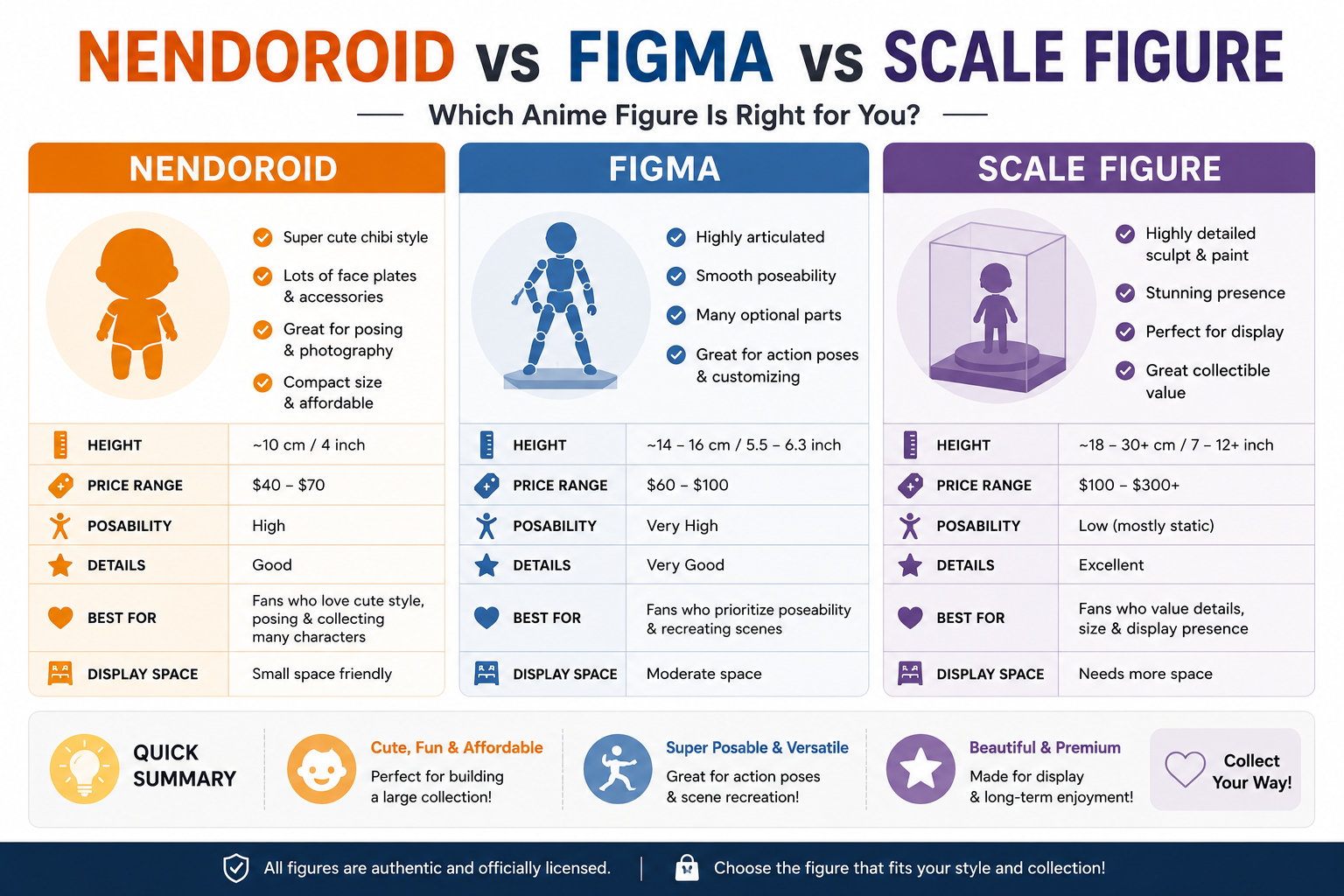
    NendoroidFigmaScale Figure
    Made byGood Smile CompanyMax Factory (distributed by Good Smile Company)Alter, Kotobukiya, Freeing, Yamato, Good Smile Company, and others
    StyleChibi / super-deformed, exaggerated proportionsRealistic proportions, action-figure-likeRealistic proportions, often dynamic sculpted poses
    Typical heightAround 10cmAround 12–15cmVaries by scale (1/7, 1/8 common), often 20cm+
    Posable?Some articulation, limited by chibi designHighly articulated, built for posingNo — sculpted in a fixed pose
    Typical price rangeRoughly $50–70Roughly $60–90Roughly $80–300+
    Best forCute displays, photography, casual collectingDynamic scenes, action poses, versatilitySerious detail, showpiece collecting

    The Three Categories, Explained

    Nendoroid — The Cute, Customizable Desk Companion

    Nendoroids are Good Smile Company’s chibi-style line — big heads, small bodies, and an emphasis on charm over realism. What makes them special isn’t just the look, though; it’s the sheer number of interchangeable parts. Most Nendoroids ship with multiple face plates for different expressions, swappable hands, and small props that let you recreate specific scenes or just give the figure some personality.

    Pros:

    • Generally the most affordable of the three main categories
    • Interchangeable face plates make them genuinely fun to photograph and display differently over time
    • Small footprint, so you can fit a lot of them on one shelf
    • Huge catalog — if a character has any figure at all, there’s a good chance it’s a Nendoroid

    Cons:

    • Articulation is real but limited compared to a Figma — the chibi proportions restrict how dynamic a pose can look
    • Some collectors find the exaggerated style doesn’t suit “serious” characters from darker or more mature series
    • Small accessories are easy to lose, and swapping parts too often can loosen the joints over time

    In my experience, Nendoroids are the best entry point for someone who isn’t sure yet how deep into collecting they want to go. They’re cheap enough that a bad purchase doesn’t sting, and versatile enough to stay fun long after the first unboxing.

    Figma — Built for Motion

    Figma is Max Factory’s line (distributed through Good Smile Company), and the entire design philosophy is different from Nendoroid: realistic proportions, engineered joints, and a level of articulation that lets you recreate almost any pose from the source material. Where a Nendoroid is meant to sit cutely on a shelf, a Figma is meant to look like it’s mid-action.

    Pros:

    • The articulation is genuinely impressive — shoulders, hips, ankles, and more all move in ways that keep the sculpt looking natural even mid-pose
    • Comes with multiple hands, face plates, and often weapons or props for recreating specific scenes
    • Scale is close to other popular collectible lines, so they display well alongside similar-sized figures
    • Excellent for anyone who wants to actually photograph their collection, not just display it statically

    Cons:

    • More expensive than Nendoroids for a similar-sized figure
    • Visible joints can bother collectors who prefer a completely seamless, statue-like look
    • Posing takes a bit of practice — badly positioned joints can look awkward until you get a feel for the range of motion

    In my experience, Figma is the category I recommend to anyone who’s into battle or action-heavy series specifically because static poses just don’t do those characters justice. A Figma of a character mid-attack looks completely different — and better — than the same character sitting still.

    Scale Figures — The Showpiece

    Scale figures are where the “statue” mentality takes over. These aren’t designed to be posed or played with at all — they’re sculpted in one fixed position, usually to a specific scale ratio (1/7 and 1/8 are the most common), and the entire focus is on sculpt quality, paint detail, and presentation. Brands like Alter, Kotobukiya, Freeing, and Yamato specialize in this category, and even Good Smile Company produces premium scale lines alongside their Nendoroid and Figma work.

    Pros:

    • The detail level is simply on another tier — paint work, fabric texture, hair strands, and dynamic sculpted poses that no articulated figure could replicate
    • Larger size makes them genuine centerpiece pieces for a shelf or display case
    • No loose joints, no missing parts to lose — what you unbox is the finished piece

    Cons:

    • Significantly more expensive, and prices climb fast for premium manufacturers or complex sculpts
    • Takes up real shelf space — a few scale figures can fill a shelf that would hold a dozen Nendoroids
    • Zero posability — you’re committing to whatever pose the sculptor chose
    • More fragile in some cases, particularly figures with thin extended parts (weapons, hair, flowing fabric)

    In my experience, scale figures are worth the jump once you already know which characters mean the most to you. They’re not a great “let’s see if I like collecting” purchase — they’re a “this character deserves the best version I can find” purchase.

    Which One Should You Actually Buy? (By Use Case)

    “I’m buying my very first figure and don’t want to overspend before I know if I’ll like collecting.” Start with a Nendoroid. Low financial risk, small footprint, and genuinely charming even as a one-off purchase.

    “I love battle/action anime and want my figures to look dynamic, not just standing there.” Go Figma. The articulation exists specifically for this — a static figure of a character known for combat scenes tends to feel like it’s missing the point.

    “I have one character I’m truly devoted to and want the best possible version.” This is scale figure territory. Save up, pick a reputable manufacturer, and treat it as a centerpiece purchase rather than a casual one.

    “I want variety without running out of shelf space.” Mix Nendoroids in with a couple of Figma or scale pieces. A lot of experienced collectors end up doing exactly this — Nendoroids fill out the collection, while one or two larger pieces anchor the display.

    “I’m worried about getting a bootleg.” This applies to all three categories, but it’s worth saying clearly: authentic Nendoroid, Figma, and scale figures from Good Smile Company, Max Factory, Alter, and similar manufacturers are not cheap. If you see one priced dramatically below typical retail — especially on a marketplace listing rather than a proper retailer — treat it as a red flag. Sticking to trusted retailers who specialize in Japanese imports is the simplest way to avoid this entirely.

    Frequently Asked Questions

    What is a Nendoroid? A Nendoroid is a chibi-style collectible figure made by Good Smile Company, recognizable by its oversized head, small body, and interchangeable face plates and accessories. They’re typically around 10cm tall and priced in the $50–70 range.

    What is a Figma figure? Figma is a line of highly articulated, realistically proportioned figures made by Max Factory and distributed by Good Smile Company. Unlike Nendoroids, Figma figures are built specifically for dynamic posing, with engineered joints and interchangeable parts for recreating action scenes.

    Are Nendoroids worth it? For most new collectors, yes. They’re the most affordable of the three main categories, take up relatively little shelf space, and the interchangeable parts keep them fun to display in different ways long after your first unboxing.

    Is a Figma or a Nendoroid better? Neither is objectively “better” — they’re built for different things. Nendoroids lean into cute, static display and affordability. Figma figures lean into realistic proportions and posability, at a somewhat higher price. The right choice depends on whether you want charm or dynamic action.

    Do scale figures come with a stand? Most scale figures include a base or stand as part of the sculpt itself, since they’re designed as a single fixed-pose piece rather than an assembled figure. Always check the individual product listing, as this can vary by manufacturer.

    Final Thoughts

    There’s no universally “better” category here — a Nendoroid isn’t a cheaper, worse version of a Figma, and a Figma isn’t a “budget” scale figure. They’re built for genuinely different purposes, and the right one depends on what you actually want out of your collection: charm and affordability, posability and action, or maximum detail as a showpiece.

    If you’re still not sure, my honest advice for a first purchase is to start small with a Nendoroid of a character you already love, see how the collecting bug hits you, and go from there.

    Once you’ve picked your category, the next question is where to actually buy it safely. I’ve put together a full breakdown of the Japan-based stores I trust for importing figures overseas — covering pricing, shipping, and which one fits different priorities. HobbyLink Japan is a great starting point if you want a low-risk preorder process, CDJapan is worth checking for preorder bonuses, and Solaris Japan is the easiest option if customs fees make you nervous.

  • The Best Site to Buy Anime Figures Online (2026 Comparison)

    The Best Site to Buy Anime Figures Online (2026 Comparison)

    Affiliate Disclosure: This post contains affiliate links. If you buy through one of them, I may earn a small commission at no extra cost to you. I only recommend stores I’ve actually ordered from or researched thoroughly — my opinions are my own.

    The Problem: You Just Want a Figure That Isn’t Fake, Overpriced, or Stuck in Customs Hell

    Here’s the thing nobody tells you when you first start collecting anime figures: buying one is easy. Buying one safely, at a fair price, without getting bootlegged or hit with a surprise customs bill three weeks later — that’s the actual challenge.

    In my experience, most new collectors make their first purchase from whatever site pops up first on Google, get a decent figure, feel confident, and then order their second one from a site that turns out to be selling recasts (unlicensed resin knockoffs dressed up as the real thing). It happens more than people admit online.

    The anime figure market has exploded over the past few years, and with that growth came a flood of sketchy resellers, price-gouging Amazon third-party sellers, and “too good to be true” listings that are, in fact, too good to be true. At the same time, the legitimate options all work slightly differently, and picking the wrong one for your situation can mean paying more than you need to, waiting months longer than expected, or dealing with a return policy that basically doesn’t exist.

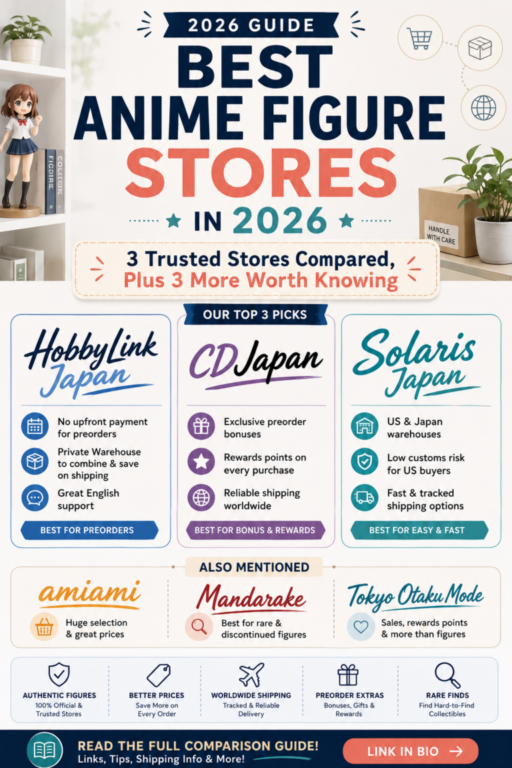
    This guide focuses on the three stores I trust and buy from personally — HobbyLink Japan, CDJapan, and Solaris Japan — with a quick look at a few other well-known names so you have the full picture.

    Who This Article Is NOT For

    Before we get into it, let’s save you some time if you’re not the right reader for this:

    • If you only want figures from your local comic shop or a US-based retailer with fast domestic shipping, this isn’t the guide for you — you’ll want a US-stocked retailer instead, which carries pre-imported inventory at a markup for speed.
    • If you’re chasing ultra-rare vintage garage kits from the 90s, that’s a different rabbit hole entirely (Yahoo Auctions Japan and proxy services), and none of the stores below specialize in that.
    • If price is truly no object and you just want zero hassle, an official brand store might suit you better than the Japan-based retailers I’m covering here, since they handle everything domestically.

    If none of those apply and you’re looking for the best balance of price, authenticity, and shipping reliability from Japan, keep reading.

    How I Picked These Stores (Selection Criteria)

    I didn’t just rank stores by name recognition. Every store on this list had to clear three bars:

    1. Verified authenticity track record. Every figure sold needs to be officially licensed stock, not recasts or bootlegs. I looked at how each store sources inventory, whether they work directly with manufacturers like Good Smile Company and Kotobukiya, and what collectors on forums and Reddit actually say about what showed up at their door.

    2. Genuine international shipping support. A lot of Japanese retail sites technically “have” an English version but fall apart the moment you try to check out with a non-Japanese address or card. I only included stores with a real, functioning international ordering process — tracked shipping, customs paperwork handled properly, and support staff who respond in English.

    3. Value for what you’re actually trying to do. “Cheapest” isn’t the same as “best value.” A store that’s dirt cheap but takes four months to ship, or charges you a fortune in unexpected fees, isn’t actually saving you money. I weighed price against reliability, return policy, and how painless the whole process is.

    Quick Comparison Table

    StoreBest ForNew or Pre-OwnedShipping ConsolidationTypical Price vs MSRPBeginner Friendly
    HobbyLink Japan (HLJ)Flexible preorders, no upfront paymentMostly newYes (Private Warehouse)At/near MSRPYes
    CDJapanPreorder bonuses, media + figures togetherNewYesAt MSRPYes
    Solaris JapanAvoiding customs surprises, US-side stockNewYes (dual warehouse)Slightly above MSRPYes

    In-Depth Reviews

    1. HobbyLink Japan (HLJ) — Best for Peace of Mind on Preorders

    HLJ’s standout feature is something called the Private Warehouse, which lets you hold multiple items for up to 60 days and ship them all together in one box. That alone can save a meaningful amount on international shipping if you’re ordering more than one figure at a time.

    Pros:

    • No upfront payment required for preorders — you’re only charged once the item actually arrives and ships
    • Preorders can be cancelled if you change your mind before release, which almost no other store allows
    • Private Warehouse consolidation cuts shipping costs on multi-item orders
    • Excellent English-language support, and a genuinely long operating history (since 1997)

    Cons:

    • Prices tend to sit closer to MSRP rather than offering steep discounts
    • Focused almost entirely on new stock, so it’s not the place to hunt for older or discontinued figures
    • The site’s search and filtering feels a bit dated compared to newer competitors

    In my experience, HLJ is the store I recommend most often to first-time buyers specifically because of the “pay when it ships” preorder model. There’s something reassuring about not having your money tied up for six months before a figure even exists.

    2. CDJapan — The Underrated Pick for Bonus Hunters

    CDJapan started as a music and media import shop and expanded into figures later, and that history still shows in the best possible way — it’s polished, professional, and reliable. What makes it worth a look is that figures here often come bundled with preorder bonuses (posters, extra accessories) that don’t show up anywhere else.

    Pros:

    • Preorder-exclusive bonuses add real value if you’re a completionist
    • Reliable, professional shipping and packaging
    • A point rewards system gives a small percentage back on every purchase, which stacks over time
    • Useful if you’re also buying CDs, Blu-rays, or artbooks, since it’s all in one cart
    • One of the longest-running international affiliate-friendly stores in this space, which speaks to how consistently they’ve treated overseas customers over the years

    Cons:

    • Prices are usually right at MSRP, with few discounts
    • Selection isn’t quite as deep as HLJ if figures are your only interest
    • Payment is charged at order time, not at shipping

    In my experience, CDJapan is the store I point completionist collectors toward — the bonus items they include aren’t gimmicks, they’re genuinely exclusive to ordering through them.

    3. Solaris Japan — Best If Customs Fees Give You Anxiety

    Solaris Japan operates a dual-warehouse model, with stock in both Japan and the US, and it’s built specifically around minimizing the customs headaches that come with importing collectibles.

    Pros:

    • US-based warehouse option means faster delivery and fewer customs surprises for North American buyers
    • Buy-direct-from-Japan option still available when you want the lower price and don’t mind the longer wait
    • Good customer service reputation, with real people answering questions promptly

    Cons:

    • Prices tend to run a bit higher than ordering directly from Japan-only stores, since you’re partly paying for the convenience
    • Catalog is smaller than HLJ
    • The dual-pricing system (Japan vs US stock) can be confusing the first time you use it

    In my experience, Solaris Japan is the one I recommend to anyone who’s been burned by a surprise customs bill before. Paying a little more upfront to know exactly what you owe is worth it for a lot of collectors, even if it’s not the cheapest option on paper.

    A Few Other Stores Worth Knowing About

    These didn’t make the main comparison because they either don’t run an accessible affiliate program or their process has some quirks worth flagging, but they’re still legitimate options worth knowing about as a collector:

    • AmiAmi — Frequently the first stop for long-time collectors thanks to below-MSRP pricing and a huge catalog covering both new and pre-owned figures.
    • Mandarake — The best source for rare, discontinued, or out-of-print figures, though the dated website interface takes some getting used to.
    • Tokyo Otaku Mode — A broader “otaku lifestyle” catalog beyond figures, with periodic sales worth watching for casual collectors.

    Which One Should You Actually Use? (By Use Case)

    “I’m buying my first figure and just want it to be safe and easy.” Go with HLJ. Excellent track record, English support, and a beginner-friendly “pay when it ships” checkout. In my experience, new collectors rarely regret starting here.

    “I hate surprise customs fees and just want it to show up without drama.” Solaris Japan’s US warehouse option is worth the small price premium. It’s the closest thing to a “set it and forget it” experience on this list. One heads-up if you’re comparison shopping right before a release: their promotional windows can move fast, so don’t sit on a decision too long once you’ve found what you want.

    “I want bonus items and a rewards program that actually pays off over time.” CDJapan’s preorder bonuses and point system reward loyalty in a way most competitors don’t bother with.

    “I order more than one figure at a time and want to save on shipping.” HLJ’s Private Warehouse consolidation is purpose-built for exactly this. Hold your items, ship once, pay less.

    “I want the absolute lowest price and don’t mind extra research.” Worth cross-checking AmiAmi’s pricing before you commit — it’s often the cheapest of the bunch, though it’s not part of the direct comparison above.

    Final Thoughts

    There isn’t one single “best” site here — that’s the honest answer, even though it’s not the satisfying one. What there is, though, is a right answer for you, depending on whether you care more about price, safety, or peace of mind on shipping.

    If you’re reading this and still not sure where to start, my honest recommendation is to make your first order through HLJ or CDJapan. Both are safe, well-reviewed, and forgiving for beginners — and if customs fees are your biggest worry, Solaris Japan is worth the small premium for the peace of mind.

    Ready to start your collection the right way? Check out https://www.hlj.com/, browse https://www.cdjapan.co.jp/, or see what https://solarisjapan.com/ has in stock this month.