Affiliate Disclosure: This post contains affiliate links. If you buy through one of them, I may earn a small commission at no extra cost to you. I only recommend stores I’ve actually ordered from or researched thoroughly — my opinions are my own.
The Problem: The “Right” Figure Type Depends on What You Actually Watch
I’ve written before about the practical differences between Nendoroid, Figma, and scale figures — price, posability, size. But there’s a layer on top of that practical comparison that matters just as much: what kind of anime you actually love changes which figure type tends to suit it best.
In my experience, this is genuinely one of those “it depends” situations, but not in a frustrating way — once you know your favorite genre’s general personality, the right figure type becomes a lot more obvious. A static, cute chibi figure does something completely different for a slice-of-life character than it does for someone mid-battle in a shonen series, and neither is wrong — they’re just suited to different kinds of shows.
Who This Article Is NOT For
- If you only care about one specific character, regardless of genre, buy the figure of that character in whatever type suits your budget and taste — genre patterns are a helpful starting point, not a rule.
- If you haven’t read my Nendoroid vs Figma vs Scale Figure breakdown yet, it’s worth reading that first — this article builds on those basics rather than repeating them.
- If you collect across every genre equally, that’s genuinely one of the best positions to be in as a collector (mine included) — feel free to treat this as a buffet rather than a strict guide.
How Genre Actually Influences Figure Choice
1. How dynamic the source material is. Shows built around movement, combat, or dramatic poses tend to translate better into posable figures — static pieces can feel like they’re missing the point.
2. The visual tone of the character designs. Some genres lean into exaggerated, expressive character designs that suit chibi styles beautifully; others rely on grounded, detailed designs that shine more in realistic scale sculpts.
3. How you’re likely to actually display it. A genre built around big emotional or dramatic moments often benefits from a scale figure capturing one iconic scene; a genre built around everyday charm often benefits from a rotating cast of smaller figures instead.
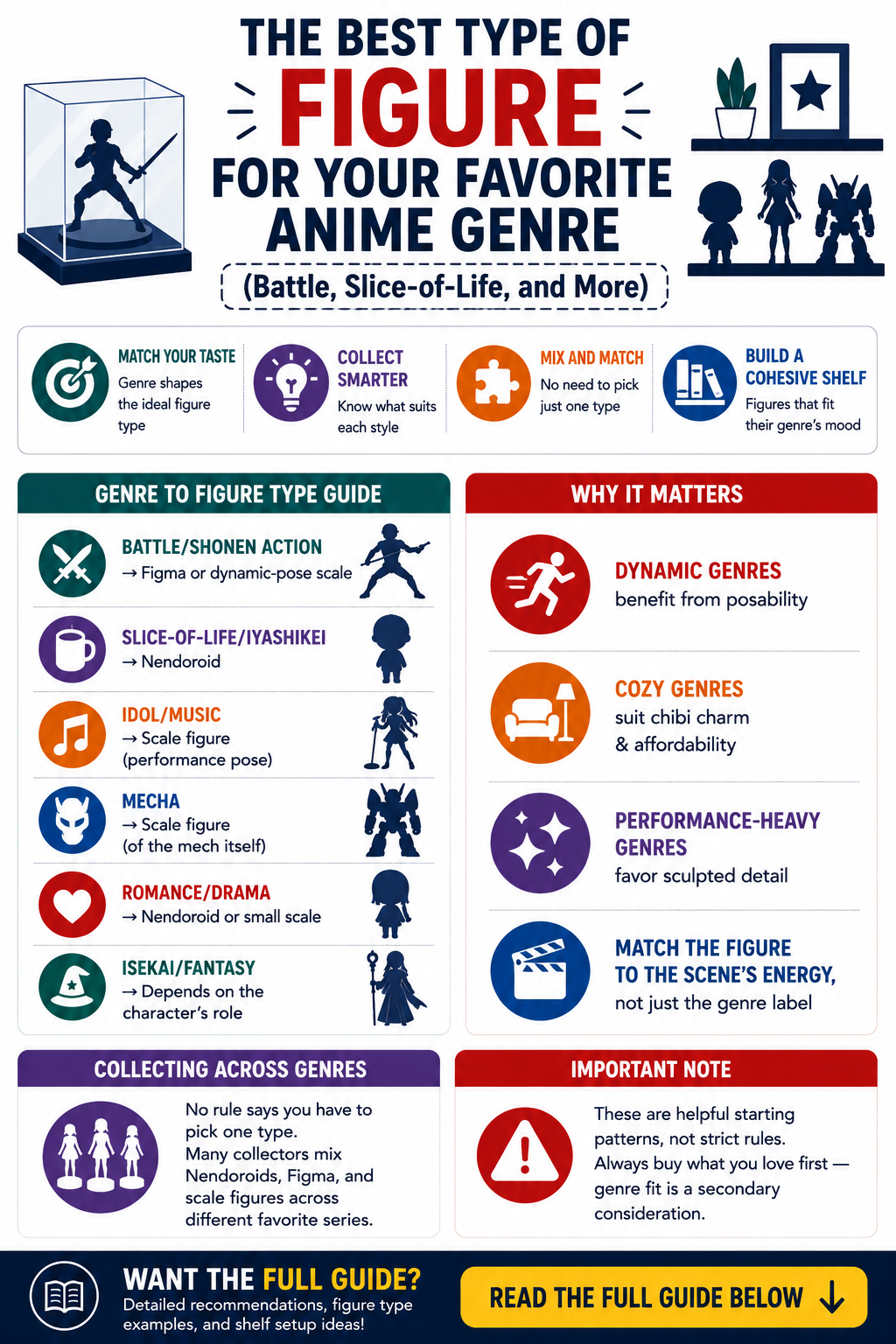
Quick Reference: Genre to Figure Type
| Genre | Best Fit | Why |
|---|---|---|
| Battle / Shonen Action | Figma, or dynamic-pose scale figures | Posability and dramatic sculpted poses do justice to combat-heavy characters |
| Slice-of-Life / Iyashikei | Nendoroid | Chibi charm suits the genre’s cozy, low-stakes tone; affordable enough to collect a whole cast |
| Idol / Music | Scale figures, often in performance poses | These series are built around visually striking stage moments that scale figures capture well |
| Mecha | Scale figures (often of the mecha itself, not just the pilot) | Mechanical detail work is a major part of the appeal, and static display suits large, complex models |
| Romance / Drama | Nendoroid or smaller scale figures | Character-focused, emotionally driven shows often suit a more intimate, expressive figure style |
| Isekai / Fantasy Adventure | Mix of Figma and scale, depending on the specific character’s role | Wide variance within the genre — action-heavy protagonists suit Figma, iconic “hero shot” moments suit scale |
Battle and Action Series: Lean Into Posability
If your favorite shows are built around fight scenes, tournaments, or big dramatic confrontations, a static figure genuinely underdelivers on what made you love the character in the first place. This is where Figma earns its reputation — the articulation exists specifically to let you recreate the kind of dynamic moment that defines these characters.
That said, don’t rule out scale figures entirely here. A lot of manufacturers specifically sculpt action-series scale figures in a dynamic mid-combat pose rather than a neutral stance — you lose posability, but gain a level of sculpted detail (flowing capes, motion lines, impact effects) that a Figma’s engineered joints can’t fully replicate. If you have a single defining character you love, a well-sculpted dynamic-pose scale figure can be a genuine showpiece.
Slice-of-Life and Iyashikei: Lean Into Charm and Collectability
Shows built around everyday moments, gentle humor, and cozy atmospheres tend to suit Nendoroids remarkably well. The chibi style matches the genre’s general visual warmth, and because these shows are often ensemble-focused, Nendoroids’ relative affordability makes it realistic to actually collect the whole main cast rather than picking just one favorite.
This is also a genre where interchangeable face plates genuinely add value — a lot of slice-of-life charm comes from small expressive moments, and being able to swap a figure’s expression to match your mood (or the scene you’re recreating) fits the tone of these shows particularly well.
Idol and Music Series: Lean Into Performance Moments
These series are usually built around visually spectacular stage performances, elaborate costumes, and specific iconic scenes — exactly the kind of thing a scale figure, sculpted in a single striking pose, captures better than an articulated alternative. Costume and hair detail tend to be a big part of what makes these characters visually distinctive, and that level of sculpted and painted detail is squarely a scale figure’s strength.
Mecha: Lean Into the Machine, Not Just the Pilot
If mecha is your genre, don’t overlook figures of the mechs themselves, not just their pilots. This is a genre where the machine design is often as central to the appeal as any individual character, and scale model kits or figures of the mecha itself can be some of the most satisfying pieces to display — particularly for anyone who also enjoys the more hands-on side of the hobby covered in my garage kit guide.
Romance and Character Drama: Lean Into Intimacy
Shows centered on close character relationships and emotional nuance tend to suit smaller, more personal figure formats — Nendoroids for a warmer, approachable feel, or smaller scale figures for something a bit more detailed without going to a large, imposing showpiece size. These genres are less about dramatic action poses and more about capturing a character’s personality, which smaller formats tend to do well.
Isekai and Fantasy Adventure: It Depends on the Specific Character
This genre spans a wide range — some isekai leans heavily into action and power fantasy (suiting Figma or dynamic scale figures), while other entries lean more into worldbuilding, comedy, or slower-paced adventure (suiting Nendoroid or standard-pose scale figures). Rather than a single genre-wide recommendation, it’s worth thinking about which specific character or moment you’re drawn to and matching the figure type to that scene’s energy rather than the genre label alone.
Building a Collection Across Multiple Genres
If, like a lot of collectors (myself included), your taste spans several genres, there’s no need to pick one figure type and stick with it exclusively. A shelf mixing a couple of Nendoroids from a slice-of-life favorite, a dynamic Figma from a battle series, and one standout scale figure as a centerpiece is a completely normal, and honestly pretty common, way to collect. The genre-to-type patterns above are a useful starting point for a specific purchase decision, not a rule about how your whole collection needs to look.
If you’re building out a mixed collection like this, it’s worth revisiting my storage and display guide for tips on protecting a varied shelf that includes both posable and static pieces, since they have slightly different care considerations.
Frequently Asked Questions
Is it “wrong” to buy a Nendoroid of a serious battle series character? Not at all — plenty of intense action series also get Nendoroid releases, and the contrast between the character’s serious source material and their chibi figure can be part of the appeal. These are general patterns based on what tends to suit a genre well, not hard rules.
Which genre tends to have the most figure variety to choose from? Popular, long-running battle/shonen series tend to have the largest catalogs across all figure types, simply due to how much merchandise gets produced for major franchises. Niche or newer series in any genre may have more limited options regardless of genre fit.
Should I buy based on genre fit or just what I love most? What you love most, always — genre patterns are meant to help you decide which type of figure to get for a character you already want, not to talk you out of a figure that doesn’t fit the “expected” mold for its genre.
Final Thoughts
There’s no strict rulebook here — plenty of great figures break these patterns entirely, and the best figure for you is ultimately the one of a character and moment you actually love. But if you’re stuck deciding between a Nendoroid, Figma, or scale figure for a specific character, thinking about your favorite genre’s general personality — dynamic and action-driven, or cozy and character-focused — is a genuinely useful starting point.
If you haven’t already, my full breakdown of Nendoroid vs Figma vs scale figures and comparison of trusted Japan-based figure stores are the natural next steps once you’ve settled on a direction.