Affiliate Disclosure: This post contains affiliate links. If you buy through one of them, I may earn a small commission at no extra cost to you. I only recommend stores I’ve actually ordered from or researched thoroughly — my opinions are my own.
The Problem: “Used” Can Mean Anything From “Displayed Once” to “Genuinely Rough”
Secondhand figures are one of the best ways to find discontinued pieces or save money on something still in production — I’ve mentioned Mandarake elsewhere on this site specifically for this reason. But “used” is a genuinely wide range. It can mean a figure that was taken out of the box, looked at once, and put right back — or it can mean something with loose joints, faded paint, and a box that’s seen better days.
In my experience, the collectors who get burned by secondhand buying aren’t usually victims of dishonest sellers — they’re victims of not knowing how to read a condition grade correctly, or not checking the specific things that actually matter for a used figure. This guide covers both.
Who This Article Is NOT For
- If you only buy new, in-production figures, this doesn’t apply to you directly — stick with trusted retailers selling new stock.
- If box condition genuinely doesn’t matter to you at all, some of the advice here about box grading will be less relevant — you can safely prioritize item condition over packaging.
- If you’re buying secondhand from an unfamiliar marketplace listing rather than a specialist retailer, read my guide to spotting bootlegs first — secondhand marketplaces carry more counterfeit risk than specialist secondhand retailers.
How to Approach Buying Secondhand
1. Understand that item condition and box condition are graded separately. A figure can be in excellent shape with a rough box, or vice versa — knowing which one matters more to you changes what you should look for.
2. Know what condition grades actually describe, since the same word (“used,” “opened”) can mean different things depending on the seller or platform.
3. Check for the specific issues that matter for the figure type you’re buying — articulated figures and static scale figures have different things worth inspecting.
Understanding Condition Grading Systems
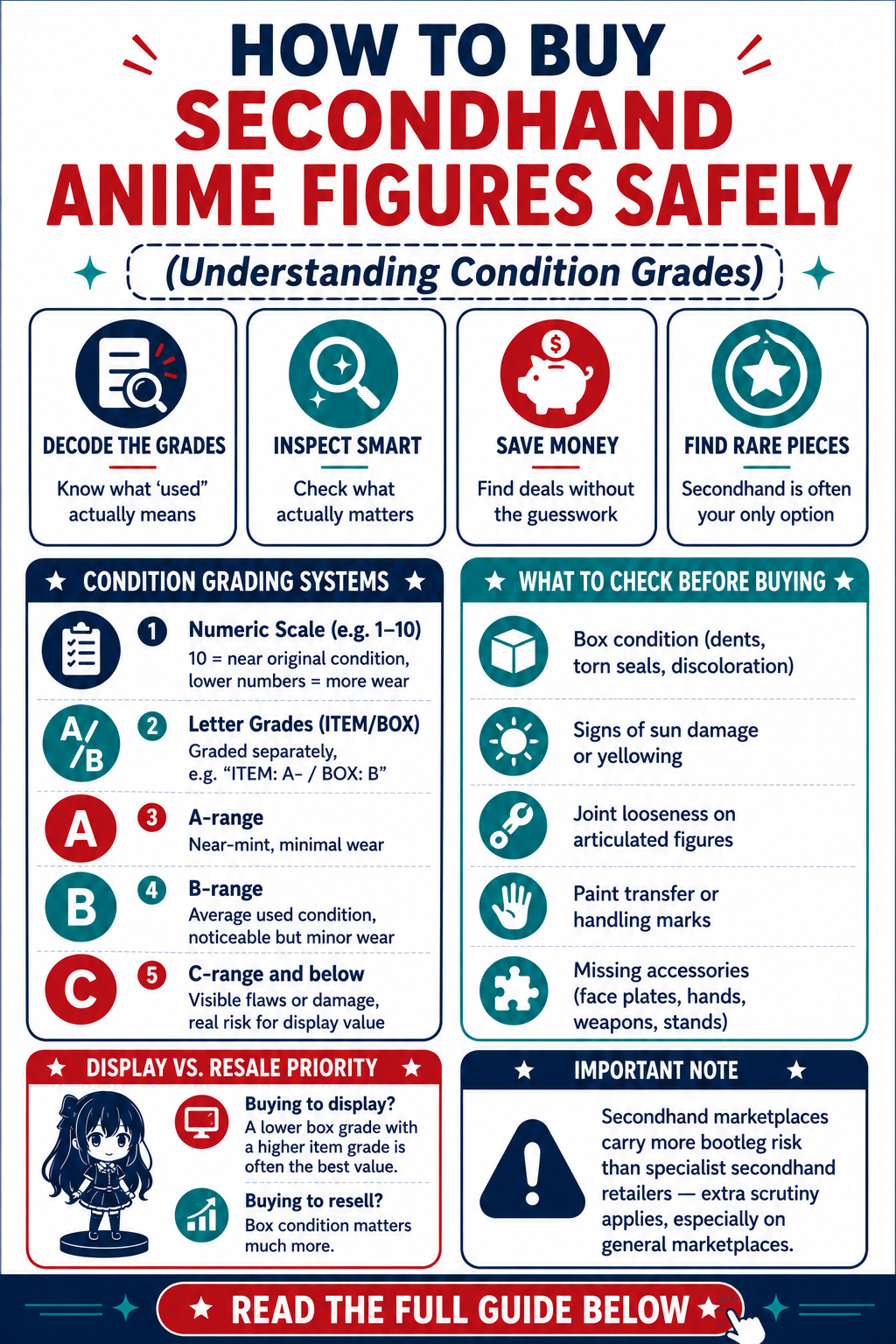
Different secondhand retailers use different grading systems, and it’s worth knowing the general logic rather than memorizing one specific scale:
Numeric scales (e.g., Mandarake’s current system): Mandarake uses a 10-point rating scale across all item categories. A “10” represents essentially original, as-new condition; a “9” has minor imperfections that don’t affect appearance or function; going down the scale, you’ll see increasingly noticeable wear, cosmetic flaws, or functional issues. This applies to the item as a whole, though listings often note box condition separately in the description.
Letter-based scales (common across other Japanese secondhand shops): Many other Japanese secondhand retailers use a two-part letter grade — one for the item, one for the box — written something like “ITEM: A- / BOX: B.” Under this style of grading:
- A-range generally means near-mint to excellent condition, with minimal to no visible wear
- B-range generally means average used condition — noticeable but not significant wear
- C-range and below generally means visible flaws, damage, or significant wear, and often carries real risk if you’re buying primarily for display value
A practical tip regardless of scale: if you’re buying to display rather than resell, a lower box grade with a higher item grade is often the best value — box damage frequently drops the price meaningfully more than it affects your actual display experience. If you’re buying with resale or serious collecting value in mind, box condition matters much more, since it directly affects what you could get for it later.
What to Actually Check Before Buying
- Box condition specifically: dents, discoloration, torn seals, or missing shrink wrap — even if you don’t care about keeping the box, box condition is often a useful proxy for how carefully the previous owner handled the whole item
- Signs of sun damage or yellowing: check listing photos closely for uneven coloring, particularly on white or light-colored parts — this kind of damage is permanent once it happens, so it’s worth spotting before you buy, not after
- Joint looseness on articulated figures: for a used Figma or similar posable figure, ask the seller directly whether joints still hold poses well, since repeated posing by a previous owner can loosen joints over time
- Paint transfer or handling marks: a slightly “greasy” feel or faint marks where accessories rubbed against the figure during storage are common and usually harmless, but worth knowing about before you buy rather than being surprised on arrival
- Missing accessories: face plates, extra hands, weapons, and stands are often the first things to go missing from a used figure — confirm what’s actually included, not just what came with the original release
Where to Buy Secondhand Figures
- Specialist secondhand retailers (like Mandarake) tend to offer the most transparent, standardized grading and the most reliable descriptions, since condition assessment is core to their business
- Community marketplaces (MyFigureCollection’s forums and marketplace features, for example) connect you directly with other collectors, who often provide more candid, detailed condition notes than a commercial listing would
- General marketplaces (eBay, Mercari) can offer good prices but require more of your own diligence — check seller feedback specifically related to figure sales, and don’t hesitate to ask for additional photos before committing
Frequently Asked Questions
Is it safe to buy a “used” figure without seeing it in person first? Generally yes, as long as you’re buying from a retailer with a standardized, transparent grading system or a seller with a solid track record — request additional photos if the listing photos don’t show what you need to see clearly.
Does a lower box grade mean the figure itself is also damaged? Not necessarily — box and item condition are typically graded separately, and it’s common to find a figure in excellent shape with a box that’s simply a bit worn or dented from storage and handling.
Should I worry about bootlegs when buying secondhand? It’s worth more caution than buying new from an authorized retailer, particularly on general marketplaces rather than specialist secondhand shops. My guide to spotting bootlegs applies just as much to secondhand purchases as new ones.
Is secondhand a good way to find discontinued or limited figures? Yes — this is genuinely one of the best reasons to buy secondhand, since it’s often the only realistic way to find a figure that’s no longer in production. Just apply extra scrutiny to condition grading and seller reputation for anything you can’t get anywhere else, since a bad purchase on a hard-to-find piece is a bigger loss than on something you could simply reorder.
Final Thoughts
Buying secondhand well comes down to understanding that condition grading is a system, not a single word — knowing how item and box grades work separately, checking for the specific issues that matter (sun damage, joint looseness, missing accessories), and matching your grading standards to what you’re actually going to do with the figure (display versus resale) will keep you from unpleasant surprises.
If you’re building a mixed collection of new and secondhand pieces, it’s worth pairing this with my storage and display guide — proper care matters just as much for a secondhand figure you’re now responsible for as it does for something bought brand new.