Affiliate Disclosure: This post contains affiliate links. If you buy through one of them, I may earn a small commission at no extra cost to you. I only recommend stores I’ve actually ordered from or researched thoroughly — my opinions are my own.
The Problem: Preorder Windows Close Fast, and Nobody Sends You a Personal Reminder
Here’s the frustrating part about figure preorders that nobody warns you about until you’ve missed one: the popular ones don’t stay open for long, announcements don’t always happen where you’re looking, and once a limited preorder window closes, your options usually shrink to paying a steep markup on the secondary market or waiting for a re-release that might never come.
In my experience, the collectors who never seem to miss a preorder aren’t just lucky or more plugged in socially — they’ve built a small, repeatable system for catching announcements before the window closes. That’s really all this comes down to: a system, not luck. This guide walks through how to build one.
Who This Article Is NOT For
- If you’re not interested in preordering and only buy in-stock figures, most of this doesn’t apply to you directly — though the tracking habits here still help if a specific character or series you love tends to get preordered out quickly once it does become available.
- If you haven’t picked a store yet, start with my comparison of trusted Japan-based figure stores — the tracking system below assumes you already know where you’re likely to place your order.
- If you’re brand new to ordering from Japan generally, my first-time buyer’s guide covers the checkout and preorder payment process itself, which is a useful companion to this article.
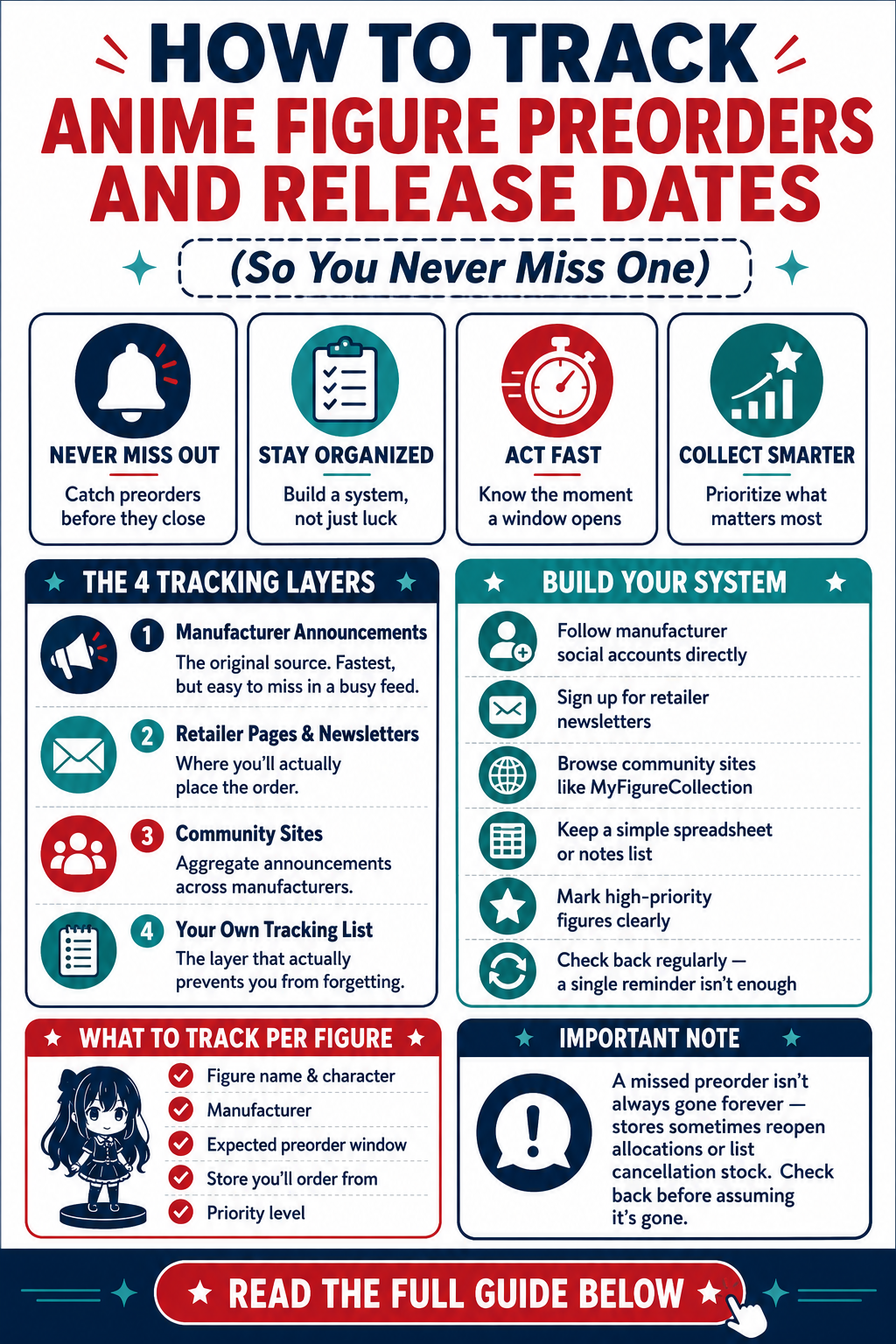
The Four Layers of a Good Tracking System
No single source catches everything reliably, which is exactly why relying on just one tends to fail eventually. A solid system layers a few different sources together:
1. Manufacturer and brand announcements — the original source of “this figure exists,” usually the fastest to know but not always the most convenient to monitor constantly.
2. Retailer preorder pages — where you’ll actually place the order, and where preorder windows, bonuses, and availability changes show up first from a purchasing standpoint.
3. Community tracking sites — collector-run databases that aggregate announcements across manufacturers, often faster to browse than checking each manufacturer individually.
4. Your own tracking list — the layer that actually prevents you from forgetting, regardless of how good the first three are at surfacing information.
Quick Comparison: Tracking Methods
| Method | Best For | Limitation |
|---|---|---|
| Manufacturer social media (X/Twitter, official sites) | Earliest announcements, straight from the source | Easy to miss in a busy feed; some manufacturers post primarily in Japanese |
| Retailer preorder pages & newsletters | Knowing exactly when you can actually buy | Only shows what that specific retailer carries |
| Community database sites (e.g., MyFigureCollection) | Browsing broadly, following specific characters/series across all manufacturers | Requires actively checking or setting up notifications yourself |
| Personal tracking list (spreadsheet, notes app, calendar) | Never forgetting something you’ve already decided you want | Only useful for things you already know about — doesn’t surface new announcements |
Building Each Layer
Follow Manufacturers Directly
Good Smile Company, Max Factory, Kotobukiya, Alter, and similar manufacturers post new figure announcements on their official social accounts and websites, often before retailers even open preorders. Following these directly is the fastest way to hear about something the moment it’s revealed — the tradeoff is that it takes active attention, since a single announcement can easily scroll past in a busy feed.
Practical tip: if a manufacturer’s official account posts in both Japanese and English, following both can occasionally give you a small heads-up, since the two don’t always post at exactly the same time.
Use Retailer Preorder Pages and Newsletters
This is where your tracking actually turns into a purchase. Once you know a figure exists, check whether your preferred store has opened preorders for it, and sign up for that store’s newsletter if you haven’t already — this is genuinely one of the more reliable ways to catch preorder openings and reopenings without manually checking every day.
If you’re deciding between HLJ, CDJapan, and Solaris Japan, my full store comparison covers how each handles preorders specifically, including HLJ’s no-upfront-payment model, which is worth knowing about if you’re planning to track and preorder regularly.
Use a Community Tracking Site
Collector-run community sites — MyFigureCollection (MFC) being the most established example — let you follow specific characters, series, or manufacturers, and often surface community discussion the moment a new figure is announced or a preorder window opens. These sites work well as a broader net, since they aggregate across manufacturers rather than requiring you to check each one individually.
Keep Your Own List
This is the step people skip, and it’s the one that actually prevents missed preorders. Even a simple spreadsheet, notes app list, or calendar with reminders works — the goal is just to have somewhere you write down “this exists, I want it, here’s the expected preorder window” the moment you learn about a figure, rather than trusting yourself to remember it later.
A simple format that works well:
- Figure name / character
- Manufacturer
- Expected preorder open date (if known)
- Which store you plan to order from
- Priority level (so your top-priority figures don’t get lost among “would be nice” ones)
Tips for Not Missing the Ones That Matter Most
- Mark your genuinely high-priority figures clearly, separate from ones you’re only mildly interested in. If everything gets equal attention in your tracking system, the ones you actually care about are more likely to slip through.
- Check back periodically, not just once. A single reminder for an estimated release window isn’t enough — preorder dates shift, and windows sometimes open earlier or later than originally announced.
- Don’t assume a missed preorder is gone forever. Retailers occasionally reopen allocations, list cancellation stock, or get additional inventory after the original window closes — it’s always worth checking back rather than assuming your only remaining option is the secondary market.
- Be cautious about secondary market pricing if you do miss a window. A missed preorder showing up at a steep markup on a resale site is also exactly the kind of listing where bootleg risk increases — my guide to spotting fakes is worth a look if you end up going this route.
Frequently Asked Questions
Where do most preorder announcements happen first? Usually the manufacturer’s own social media or website, slightly ahead of when individual retailers open preorders for that item. Retailer newsletters tend to be the fastest way to know exactly when you can place an order, even if they’re not always the very first announcement.
Is it worth using more than one tracking method at once? Yes — this is really the core idea of this guide. No single source catches everything reliably, so combining a couple of sources (a retailer newsletter plus a personal tracking list, for example) meaningfully reduces the chance of missing something you actually wanted.
What should I do if I miss a preorder window? Check back periodically, since reopened allocations and cancellation stock do happen. If you do end up buying secondhand or from a resale listing at a markup, apply extra scrutiny for authenticity, since marked-up secondary listings carry more bootleg risk than a direct retailer preorder.
Do I need to follow Japanese-language accounts to catch announcements early? Not necessarily, but it can occasionally help, since some manufacturers post in Japanese slightly ahead of their English content. It’s optional rather than essential — a well-built system using English-language retailer and community sources will still catch the vast majority of what you’re looking for.
Final Thoughts
Missing a preorder almost never comes down to bad luck — it usually comes down to relying on a single source that didn’t happen to catch that particular announcement in time. Layering a few tracking habits together (following manufacturers, signing up for retailer newsletters, browsing a community site occasionally, and keeping your own simple list) turns “hoping you don’t miss it” into an actual system.
If you’re building out your preorder habits, it’s worth revisiting my first-time buyer’s guide for how the actual preorder payment process works once you’ve found what you’re looking for.