Affiliate Disclosure: This post contains affiliate links. If you buy through one of them, I may earn a small commission at no extra cost to you. I only recommend stores I’ve actually ordered from or researched thoroughly — my opinions are my own.
The Problem: The Damage Happens So Slowly You Don’t Notice Until It’s Done
Here’s what makes figure damage particularly frustrating: it’s almost never sudden. Nobody drops a figure and shatters it on day one — instead, it sits on a sunny shelf for a year, and one day you notice the white parts have gone slightly yellow, or a color that used to look vivid now looks faded. By the time you notice, the damage is already done and generally can’t be reversed.
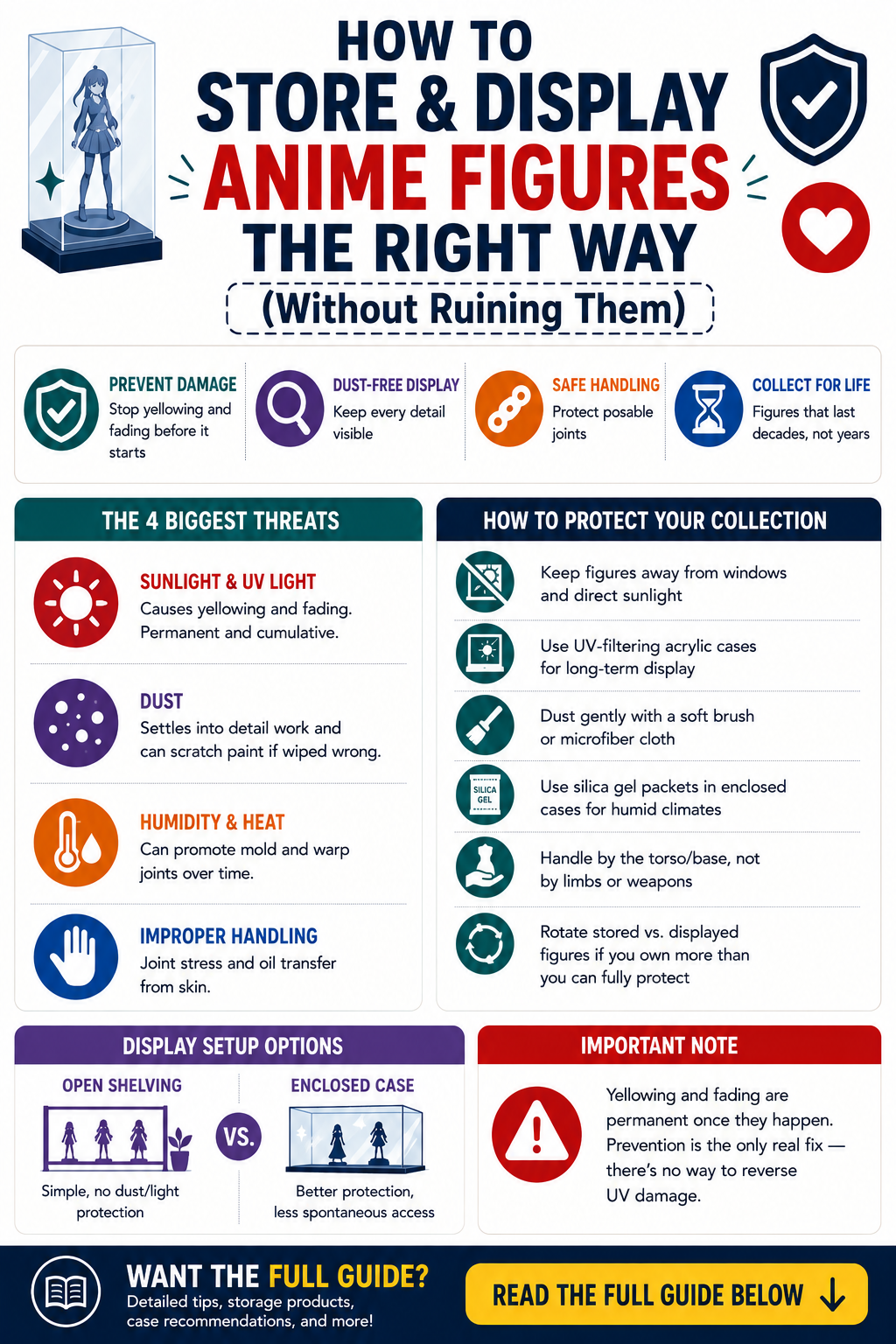
In my experience, most collectors don’t lose figures to accidents — they lose them slowly to sunlight, dust, and humidity, simply because nobody told them these were actual threats worth planning around. This guide covers what’s actually causing that slow decline and what to do about it, without requiring you to build a museum-grade archive for a $60 Nendoroid.
Who This Article Is NOT For
- If you keep your figures sealed in the box and never display them, most of this doesn’t apply to you — an unopened box already provides a lot of natural protection. This guide is for collectors who actually want to display their figures.
- If you’re looking for repair advice for a figure that’s already yellowed or faded, unfortunately this kind of damage is largely permanent — this guide is about prevention going forward, not restoration.
- If you only own one or two figures and keep them somewhere naturally dim and stable, you probably don’t need to overhaul your setup. This matters most as your collection grows and stays displayed long-term.
What Actually Damages Figures (and Why)
1. UV light causes yellowing and fading — and it’s irreversible. This is the single biggest threat to a displayed figure, and it’s also the one most collectors underestimate.
2. Dust is more than cosmetic. It settles into fine detail work and, combined with humidity, can contribute to surface degradation over time.
3. Humidity and temperature swings affect materials over the long term. PVC and joint materials react to their environment more than most people expect.
Quick Reference: Threats and Fixes
| Threat | What It Does | How to Prevent It |
|---|---|---|
| Direct or indirect sunlight | Causes yellowing and uneven color fading, especially on white/light parts — cumulative and permanent | Keep figures away from windows; use UV-filtering acrylic cases if displaying near any natural light |
| Artificial light (some LEDs, fluorescent) | Lower-level version of the same UV damage over long exposure | Use “UV-free” or high-CRI LED lighting, positioned a reasonable distance from the figure |
| Dust | Settles into detail work, can scratch paint if wiped incorrectly, contributes to grime buildup | Regular gentle dusting with a soft brush or microfiber cloth; enclosed cases for long-term display |
| High humidity | Can promote mold on painted surfaces and affect adhesives over time | Keep relative humidity in a moderate range; use silica gel packets in enclosed cases, particularly in humid climates |
| Heat / temperature swings | Accelerates plastic aging and can warp or loosen joints | Avoid placing figures near vents, radiators, or direct heat sources |
| Improper handling | Oils from skin, accidental drops, joint stress on posable figures | Handle by the base/torso rather than limbs; consider light gloves for particularly valuable pieces |
Light: The Threat That Does the Most Damage
If you only fix one thing after reading this article, make it light exposure. UV radiation breaks down the plastic polymers used in most figures, which shows up as yellowing (especially on white or light-colored parts) and uneven color fading over time — and once it happens, it doesn’t reverse.
The tricky part is that this isn’t limited to figures sitting in direct sunlight. Indirect daylight through a window still carries enough UV to cause gradual damage, just more slowly. A figure that looks fine after a few months on a sunlit shelf can show noticeable fading within a year or two.
Practical steps:
- Keep figures away from windows, and especially away from direct sun exposure at any point in the day
- If you’re using a display case, UV-filtering acrylic panels meaningfully reduce this risk compared to plain glass or open shelving
- For artificial lighting, look for LED lighting specifically labeled low-UV or UV-free, and avoid older fluorescent bulbs
- If you’re storing figures long-term rather than displaying them, darkness is genuinely the safest option
Dust: Small Particles, Real Consequences
Dust isn’t just an aesthetic annoyance. It settles into fine sculpted details — hair strands, fabric texture, small accessories — and over time can dull the finish and make cleaning harder without risking damage. Combined with humidity, accumulated dust can also contribute to mold growth in genuinely humid environments.
Practical steps:
- Dust regularly with a soft brush or microfiber cloth rather than letting it build up — it’s much easier to remove lightly and often than to clean off a thick layer later
- Avoid wiping dust off with a rough cloth or paper towel, which can scratch paint on close inspection
- Enclosed display cases dramatically reduce dust accumulation compared to open shelving, at the cost of being slightly less convenient to interact with
Humidity and Temperature: The Slower-Moving Threats
These matter more for long-term collections than for a single figure sitting out for a few months, but they’re worth knowing about as your collection grows.
- Moderate, stable humidity is the goal. Excessive humidity can promote mold on painted surfaces and affect glue or adhesive points over time; excessively dry conditions can increase static buildup, which in turn attracts more dust.
- Avoid placing figures near heat sources — radiators, direct sun-warmed surfaces, or vents — since heat accelerates the same aging processes as UV exposure.
- A stable environment matters more than a “perfect” one. You don’t need lab-grade climate control for a normal collection; the goal is just avoiding extremes and big swings, not hitting an exact number.
Handling: Don’t Let Posability Work Against You
This one’s specific to articulated figures — Figma in particular, given how much of its appeal is built around posing.
- Support joints properly when posing, rather than forcing a limb past its natural range of motion
- Handle by the torso or base, not by grabbing an extended limb or weapon, which puts unnecessary stress on the joint or a thin sculpted part
- Avoid repositioning too frequently. Repeated posing does put gradual wear on joints over time — it’s fine to enjoy displaying your figure dynamically, just be mindful that constant repositioning isn’t free
- Consider light cotton gloves for particularly valuable pieces, since skin oils can transfer to certain finishes over repeated handling
Choosing a Display Setup That Fits Your Collection
Open shelving is the simplest and most accessible option — you can rearrange and interact with figures easily — but it offers no protection from dust or light on its own. This works best in a room that’s already naturally dim and away from windows.
Enclosed display cases (glass or acrylic) meaningfully reduce dust exposure and, if UV-filtering, reduce light damage as well. The tradeoff is cost and slightly less spontaneous access to your collection.
Rotating your collection — keeping some figures on display and others stored safely — is a practical middle ground if you own more figures than you can properly protect all at once. This also has the side benefit of evenly distributing light exposure if you periodically swap which figures are up front.
Frequently Asked Questions
Can yellowing be reversed once it happens? Generally no. Yellowing results from a chemical change in the plastic itself, not just surface discoloration, so it’s not something you can simply clean or polish away. Prevention is genuinely the only reliable strategy here.
Is it safe to display figures on an open shelf, or do I need an enclosed case? Open shelving is fine as long as the location is reasonably protected from direct and indirect sunlight and isn’t in a high-dust environment. Enclosed cases become more valuable as your collection grows in both size and value, or if your display space gets any natural light.
Do I need to worry about this for a single Nendoroid on my desk? Realistically, the risk scales with time and light exposure, not just figure count. A single figure kept away from a window for a year or two isn’t at serious risk — the concerns in this guide matter most for larger, longer-term, or sunlit displays.
Does the original box protect the figure if I keep it stored away? Yes, generally — original packaging offers a reasonable degree of protection against light and dust for figures you’re not actively displaying, which is part of why some collectors keep a portion of their collection boxed rather than out on shelves.
Final Thoughts
None of this requires turning your home into a museum. The core principles are simple: keep figures out of direct and indirect sunlight, dust them gently and regularly, avoid extreme humidity or heat, and handle articulated figures with a bit of care around the joints. Do those four things consistently, and most of the damage that quietly ruins collections over the years simply won’t happen to yours.
If you’re still building your collection, it’s worth revisiting my guides on choosing between Nendoroid, Figma, and scale figures and buying from trusted Japan-based retailers — starting with an authentic figure from a reliable source is the first step toward a collection that’s actually worth protecting long-term.
コメントを残す